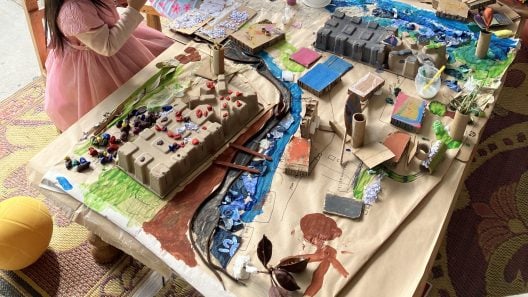
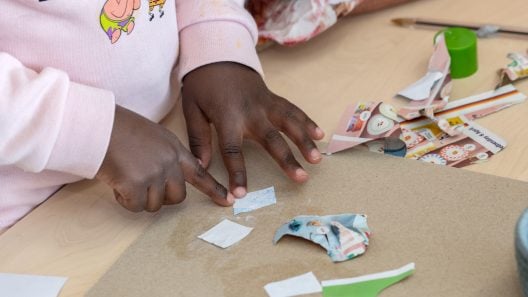
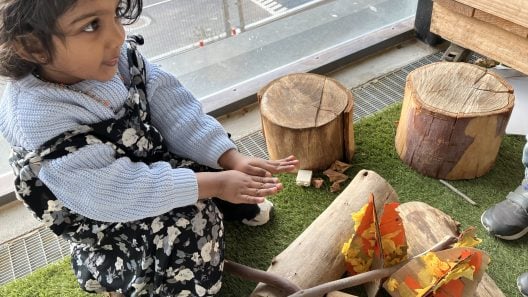
Early childhood services play a vital role in responding to the diverse needs of their communities. At Gowrie Docklands Kindergarten (GDK), this has meant developing thoughtful approaches to support newly arrived migrant families.
As a funded kindergarten, GDK operates within the free kindergarten guidelines, which means children with humanitarian visas are eligible for Early Start Kindergarten (ESK) and given priority of access.
We spoke with Liz, Educational Leader at GDK, about the key ways the service supports newly arrived families. “Some families arrive in the country the day before their child starts with us,” Liz shares. “This means we’ve really had to rethink how we support families.”
For many, starting kindergarten coincides with navigating a new country, a new education system, and often a new language—all while adjusting without a local support network or even basic belongings.
1. Provide a warm and welcoming community
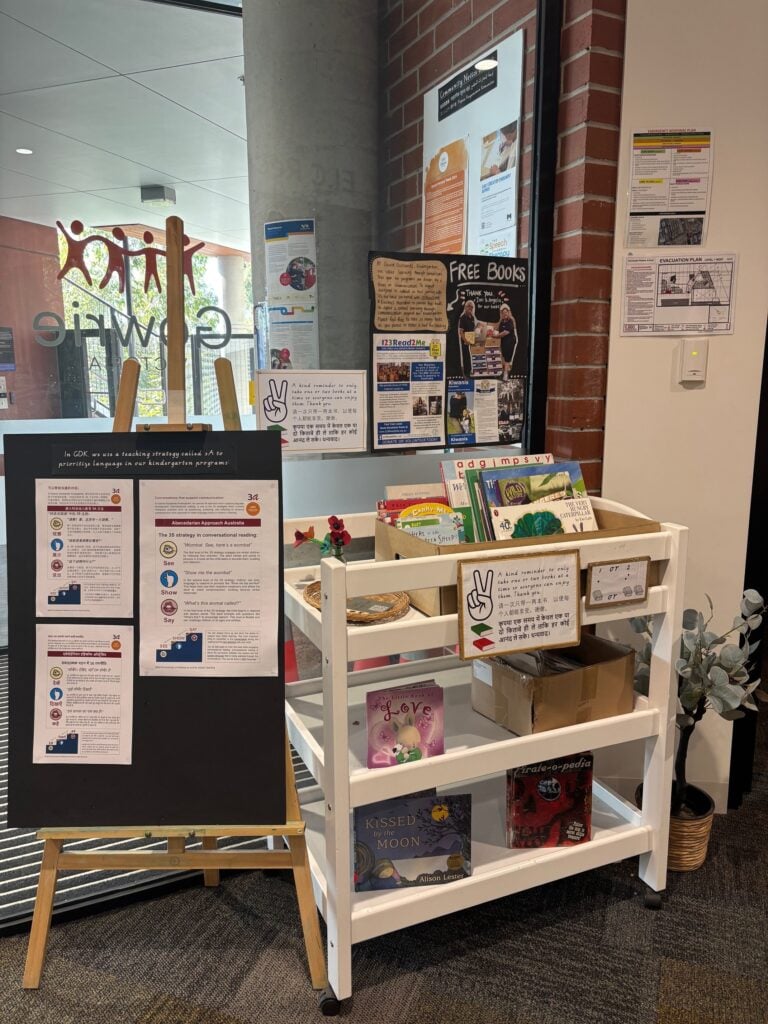
For GDK, support begins with ensuring every family feels welcomed and included. By promoting the use of home languages, celebrating cultural diversity, and learning what matters most to each family, educators are able to display genuine care and respect, with a tailored approach.
The team takes a strengths-based approach, where home languages are encouraged, educators come from diverse backgrounds, and translation tools are used to build stronger connections. Celebrating cultural traditions is woven into the program, ensuring that all children and families feel seen and valued.
Tip: Learn what the families’ first language is, and spend a little time learning key terms, (such as hello and goodbye) in their language. This will go a long way to showing the family that you respect them and their cultural background. If you can’t remember the terms right away – that’s ok – print them off and display them somewhere central so you can read it while you’re learning!
2. Offer practical support during settlement
For many families at GDK, kindergarten is just one part of a much bigger journey including adjusting to a new country, culture and educational system. Educators and leaders at GDK have had to build a working knowledge of visa systems, as well as Medicare and National Disability Insurance Scheme (NDIS) eligibility. This knowledge means they can guide families to appropriate supports with confidence.
“We can’t just operate according to the norm,” Liz explains. “Depending on the visa situation, some families don’t have Medicare, they can’t access the NDIS, and we can’t secure additional funding through Kindergarten Inclusion Support. It’s up to the team to support one another, and in turn, the child and family.”
This means enrolments are approached flexibly, with staff taking time to understand each family’s circumstances. Children may begin with shorter days and gradually extend their time, giving them space to settle in at their own pace. For these children, kindergarten is not only an introduction to education, it’s also an introduction to a new culture and language.
Tip: Reflect on the needs of your specific community; if many families are entering the country in complex visa circumstances, research what services and supports they can and can’t access. If you work in a community where many children have experienced trauma, learn more about trauma-informed practice, and so on!
If you are in an eligible council area, you can connect with your local CALD Officer. These workers can help put supports in place (such as translations services) and can help with external settlement supports such as housing and access to community connections.