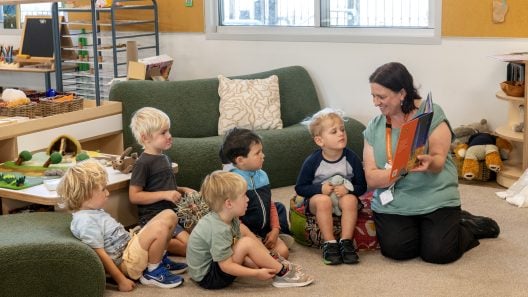
We sat down with Karen Weston, CEO of Gowrie Victoria, to talk about the importance of child safety in early childhood education and care. Karen reflects on the Victorian Government’s recent Rapid Child Safety Review and the recent Education Ministers meeting, and shares why safety is about more than regulation – it’s about culture, professionalism and the everyday decisions that place children first.
What are you hearing from families and professionals about how they’re feeling right now?
It’s been an extremely challenging few months in the early childhood sector. Recent events have undermined families’ trust and confidence in early childhood education and care. Safeguarding children must be a priority.
What has been heartwarming is hearing from families who have come forward to say they feel safe in our services at Gowrie Victoria, and in many services across Victoria. I want to take a moment to acknowledge the tireless work that educators do. Their professionalism, care and commitment every day is what keeps families and children safe. I am so proud of the sector for continuing to show up in such a meaningful way and supporting parents at this time.
What are your thoughts about the response from government?
It’s great to see governments respond to parent and sector concerns. The Premier committing to reforms to the Reportable Conduct Scheme and the Working with Children Check to allow unsubstantiated information or intelligence to inform this Check are needed and an initial investment of $42m the Rapid Safety Review Reforms is appreciated. The Commonwealth Government investment of $189m to establish a National Educator Register, develop mandatory child safety training with workforce subsidies to cover wage costs and investment in the Starting Blocks website to display more information for families, are all welcomed. Education Ministers holding a special purpose meeting on early childhood acknowledges the importance of the sector and the educators who care for, educate and keep children safe. Strong and united action was needed and governments have responded.
Why is creating a culture that supports child safety important and not just focussing on regulation and compliance?
It’s important to understand that we cannot separate child safety from the discussion about high quality ECEC – they’re inherently linked. Child safety underpins quality programs. It’s not one or the other, and child safety shouldn’t be a box ticking or compliance exercise.
If we’re constantly listening to and interacting with children, engaging with them, and being intentional in every element of the program, children are going to be safe.
When we talk about culture, it’s often framed as if the responsibility sits with the educators who are working with children. Educators play a critical role, but they mustn’t carry this responsibility alone. Their work is most effective and sustainable when organisations provide strong, consistent support. This responsibility sits with the Approved Provider, who must ensure educators have the structures and culture they need to do their job well. Educating young children takes energy, enthusiasm, warmth and deep pedagogical thinking – which is why a positive culture must be led and modelled from the top.
At Gowrie Victoria, child safety is at the heart of our philosophy, and it’s woven into everything that we do. We value children, and, as a whole organisation, we centre their voices. We are constantly reflecting on how children deserve to be respected, educated, cared for – and deeply within that is the right to safety. For us, it’s an organisation-wide approach, which includes a robust recruitment and induction process, where we observe practice before appointment. All staff who are new to the organisation, attend a Welcome to Gowrie induction session, where they learn about what child safety looks like in theory and in practice. We use this opportunity to delve deep and set expectations, ensuring that everyone within the organisation is on the same page, from day one.
For us, it’s essential that leadership structures are accessible and supportive. Some of our services are quite large, so we have larger leadership teams on site to lead operations. We invest in leadership and purposefully build the capacity and skills of our people, building leaders within our own organisation. Our culture and history of mentoring and coaching is deeply embedded in all of our services, where educators support one another on their professional learning journey.
How do robust policies and continuous improvement processes help us go beyond base regulatory requirements?
Robust policies are the foundation of good practice, and this is true across all early childhood services. Of course, it’s educators who bring these policies to life each day, and their role in doing so deserves recognition. In recent years, the sector has made real progress in advocating for children’s rights; through intentional and explicit teaching around body safety, safe and unsafe touch, and helping children develop the language to describe how they feel about their own safety. At Gowrie, the Child Safe Standards underpin everything we do. Families can access these Standards in multiple languages at the entrance of each service. Our Code of Conduct and Statement of Commitment to Child Safety are displayed at every site and on our website and communication platforms.
Importantly, policies are not static. We reflect on them continuously, drawing on family feedback, one-on-one conversations, and community engagement to strengthen our practice and strive for excellence.
Our RTO also supports this culture of continuous improvement. Learners attend face-to-face sessions at The Harbour, where their classroom overlooks the children’s outdoor play spaces. This environment allows them to observe quality programs in action and to see the deep thinking and layered approaches which make practice high-quality.
How do we take the Child Safe Standards into account with building design?
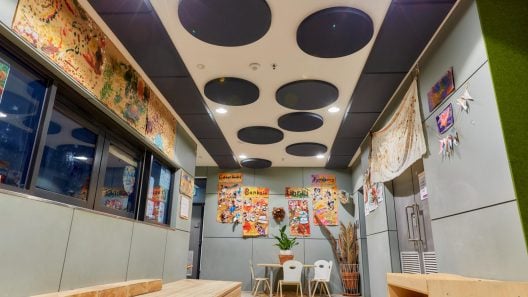
We are advocating for more investment around improving the visibility and design of ECEC services and would be delighted to see building designs which support supervision in all services across Victoria. We like lots of glass so we can see into rooms from outdoor spaces, into bathrooms, rooms and outdoor play spaces designed to make supervision easy.
Our operations team work closely with service leadership to ensure that safety and intentionality are at the forefront of any decisions relating to building modifications. We are incredibly lucky that all our services have windows throughout all indoor spaces, which increases visibility. This is a legacy from our very beginning, from the design of our initial Carlton North site.
As with many early childhood services, we strive to meet the needs of our communities in all elements of our service provision. Some of our services now have doors on the children’s toilet cubicles; promoting children’s privacy, whilst having the doors low enough that educators can still see in if needed.
How do staffing structures, rostering, and ratios contribute to keeping children safe?
Staffing structures, rostering, supervision and ratios play a huge role in keeping children safe. Once again, this responsibility sits with the Approved Provider and service leadership.
We should look at problems – like single staffing – with a different lens. If staffing is provided at the required levels by the Approved Provider, if routines are intentional and if educators are deeply in tune with children and their teams, then no educator would be left on their own with children.
Intentionality should be at the forefront of rostering and staffing. For us, this means that every room is fully staffed to run all day, so generally children aren’t moved into family groupings unless there’s a genuine reason. This creates consistency and stability for children and helps educators focus on building strong relationships and being with the children.
We’ve made decisions to invest in a more inclusive workforce with staff coming from the communities we serve, and male employees are valued members of our teams, with all our staff modelling to children caring and respectful relationships.
We, like many other services, also minimise our use of agency staff. Our rooms use rostering where an additional team member is there throughout the day, so educators can take lunch breaks and manage absences without disruption. It’s not about hiring more people to boost the ratios – it’s about creating flexibility for educators to spend more time directly with children, with fewer interruptions. This approach if efficient and provides continuity, stability, and above all, safer environments for children.
How do we balance emerging technologies, like CCTV, play in supporting child safety?
I welcome the outcomes of the Victorian Government’s Rapid Child Safety Review, and I know technology like CCTV is being considered as part of the response. While I understand the intent, I don’t believe CCTV alone will resolve the deeper, structural issues at the heart of child safety in early childhood education and care.
CCTV brings with it complex questions – around permissions, storage, cybersecurity and, importantly, children’s rights. We need to ask: what is the purpose, and what will it achieve? We should also consider whether constant surveillance is something we would expect in other professions, like teaching or healthcare. I believe our focus should be on uplifting, respecting and retaining educators, not undermining their professionalism. The most powerful investment we can make is in educators themselves – through professional development, wellbeing supports, and genuine and supportive leadership. That’s what creates safer and more respectful environments which promote better outcomes for children.
Real solutions lie in investing in quality and professionalism. When services build a strong culture of safety, employ and retain highly skilled educators, and create conditions where staff can focus on meaningful work with children, that’s when we see the most positive outcomes.
It’s been a really challenging time – thank you all for standing up, being professionals, supporting families and doing what you do best; educating and advocating for young children.