At Gowrie Victoria, we take our 85-year history of practice-based learning seriously. One of the most powerful ways this commitment comes to life is through Communities of Practice (CoPs). In early childhood education, CoPs provide a practical, collaborative space for educators to learn together, reflect critically, and translate insights into action.
What is a Community of Practice?
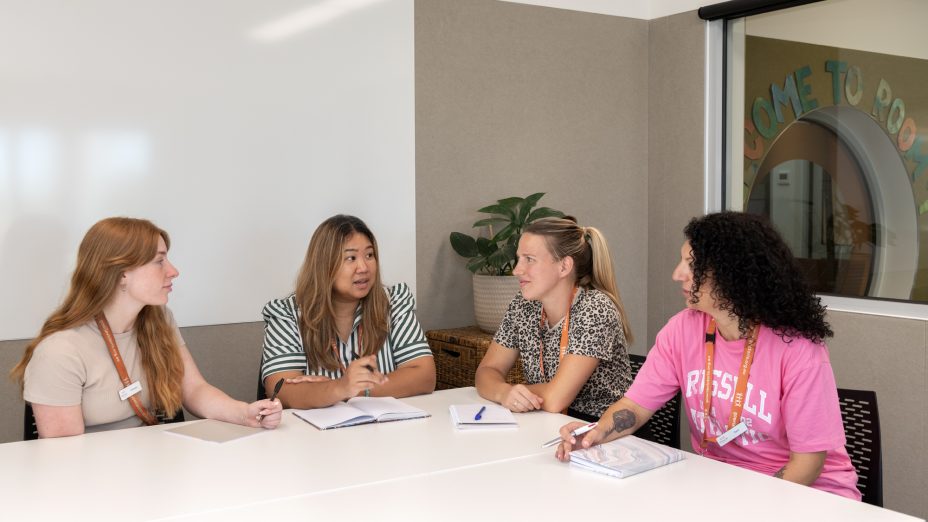
A Community of Practice is a professional learning model used across many sectors. At its heart, a CoP is a group of people with a shared interest, who come together to build knowledge, reflect, and create change. In ECEC, this means educators, teachers and leaders meeting regularly as equals to learn from one another, unpack challenges, and develop strategies which can be applied in daily practice.
Amy, one of our Educational Leaders from Gowrie’s Carlton North service, describes CoPs as a structure that generates ideas, champions best practice, and supports continuous improvement. “When we take service-wide goals and build a CoP around them, it gives us the chance to unpack what’s going well, what’s challenging us, and what we want to do next. It’s our opportunity to engage in big-picture thinking,” she explains.
How Communities of Practice work at Gowrie
At Gowrie, every service maintains a First Nations CoP, but other groups emerge from service priorities, Quality Improvement Plans, and educator interests. This approach ensures that CoPs are empowering and embedded, and not viewed as just another task—instead they meet a tangible need. For Broadmeadows Valley, CoPs change over time. Some are new, some have remained for years, and some have fizzled out.
Even though the topics vary, there are similarities in the way CoPs are run. Once a topic has been identified, each room nominates an educator to be part of the CoP, and participation is open to anyone. The CoP meets monthly to discuss ideas, share learning, and action change.
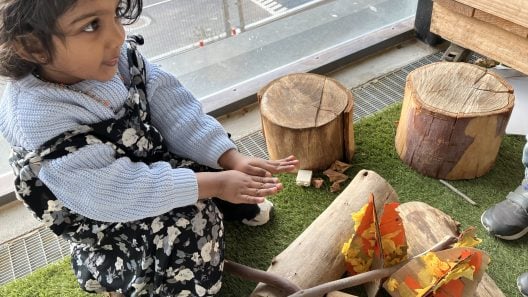
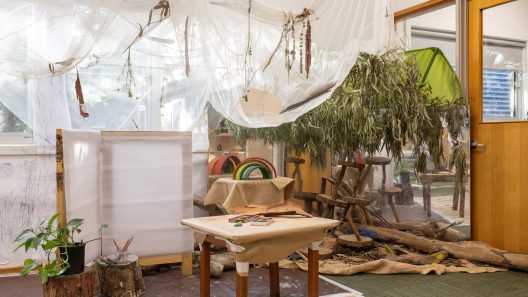
At Carlton North, this year saw the creation of a CoP around promoting the outdoor environment as an equally weighted learning space. After each meeting, all participants are given an action to complete—ranging from sharing meeting notes or key information with a team, to leading the implementation of a supervision plan for a redesigned space.
Building accountability through shared leadership
For Leslie, Educational Leader at Broadmeadows Valley, the real strength of a CoP lies in the way it shifts power. “It’s not a top-down approach,” he reflects. “You have colleagues keeping each other motivated and accountable. Educators identify the problems and are given the power and resources to solve them.” When everyone has a particular role in the CoP, this means that reflections translate into real action. Each CoP meeting begins with a recap on the actions from the last meeting, ensuring that outcomes are revisited and progress is embedded.
Some CoPs have been embedded for years. At Broadmeadows Valley, long-term initiatives include the wellness-focused group that implemented the Smiles for Miles program—which focuses on the key themes of eating well, drinking well and cleaning well—and Mindful Mondays.
These initiatives have become hallmarks of the service’s individual culture, contributing to sector recognition and achievement awards. Leslie reflects that for something to be deeply embedded, there needs to be a culture of feedback and reflection, where educators are able to co-design change. This shared ownership means that educators are more motivated and invested.
For educators, CoPs are not only about professional growth but also about deepening practice in meaningful ways. Charlotte Elliott-McKeown, an educator at Carlton North, reflects on her involvement in the First Nations Perspectives CoP, highlighting that it has deepened her knowledge and “supported meaningful connections which foster identity and belonging for children and educators”.
While finding time and structure can be a challenge, the leadership team has worked closely with educators to make the process collaborative focusing on “power with” rather than “power over.”
Tips for getting started
Both Amy and Leslie encourage services to begin small and build momentum over time.
For Amy, the biggest challenge lies in navigating the time and staffing. Carlton North provide non-contact time where possible, and Amy reflects that services should start with something small. “The benefits of shared thinking, shared doing, shared decision-making, and achieving shared goals are worth prioritising,” she says
Leslie adds that flexibility is key. Some CoPs continue for years, others naturally wind down, and new ones are created in response to emerging needs. What matters most is that CoPs remain relevant and responsive to the priorities of services and the sector.
Reflective questions for educators:
- What benefits could Communities of Practice bring to your service?
- How do you ensure that reflection in your service leads to practical action?
- Which areas of practice would benefit most from a Community of Practice in your setting?
- What small steps could you take to trial a Community of Practice in your service?
- What structures could you put in place to allow a Community of Practice to work in your setting?