The past year has presented the early childhood sector with new challenges regarding child safety. Changes to the regulations have meant that services are now updating the National Workforce Register and educators are undertaking the new, comprehensive child safety training. We know that every child has the right to be safe, protected from harm and cared for in environments that support their wellbeing. This article is written in a spirit of wanting to contribute to the debate and discussion on these important issues.
Ministers at both State and Commonwealth levels are responding to child safety concerns and have placed under the roof ratios and adequate supervision at the centre of a national discussion. No one would dispute that adequate supervision is essential. The minimum standards regarding staffing, qualifications and ratios must be met at all times. Adequate supervision should be seen as the minimum standard in early childhood practice; it is not the benchmark of high-quality practice.
Some are asking whether supervision should be more tightly defined in the National Law. We must be careful not to elevate minimum compliance as a marker of quality. This would risk lowering expectations rather than lifting them. It could result in us turning our focus to supervision rather than interactions, learning and building a child safe culture in our services.
Having been involved in the development of the National Quality Framework (NQF), and later observing its implementation through a regulatory lens, I understand why supervision attracts such attention. When serious incidents occur—including those revealed in Victoria last year—supervision is often the first issue examined. It commonly becomes central when regulators investigate serious incidents or take formal compliance action, because harm, hazards and children leaving unnoticed all raise questions about whether supervision was adequate. Questions about supervision should rightly follow, however those questions are usually considered after the event, when the outcome is already known. What such reviews often show is that child safety depends on many moving parts: people, environments, judgement and teamwork. A definition of supervision, enshrined in law cannot capture that complexity.
Supervision is not one thing. It cannot be reduced to ratios, headcounts or a map of where educators stand in the space. While these factors matter, they do not capture the many conditions that shape children’s safety and learning each day; the design of the environment, transitions between areas, the nature of children’s play, the intentional inclusion of risk, the experience and confidence of educators, or the strength of communication, leadership and teamwork within the setting.
A definition alone cannot tell us whether staff feel supported to exercise judgement, ask for help, respond quickly when circumstances change, or report matters to regulators. Educators work in a dynamic space, where they are constantly making decisions, weighing up risk, and using their professional judgement. This is part of the art and science of teaching. If adequate supervision is the minimum standard, then quality interactions, intentionally designed environments, engaging experiences, and a positive culture are what lifts practice to a higher standard.
Safety and learning are not competing priorities and should be seen as connected in all early childhood settings. Any educator can tell you that a service can be meeting staffing requirements and supervision may still not be adequate—an educator who is actively engaged with children is more likely to anticipate risk, notice changes in behaviour, respond quickly and support children to make safe choices.
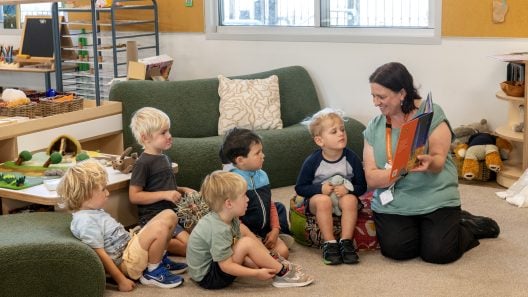
If organisational requirements move away from supporting children’s learning and development, and toward supervision as the main objective, we risk sending the wrong message about what matters most. Of course, supervision must remain central to child safety; but children deserve more than adults nearby observing them. They need educators who listen, respond thoughtfully, extend learning, guide behaviour and create a sense of belonging. If we want a stronger system for children and families, we must continue to pursue quality rather than settle for compliance. Thousands of educators do this every day—balancing safety with care, teaching and child led learning, and responsibility with warmth.
Any proposed changes to staffing arrangements under the NQF must be realistic and carefully considered, because services are already managing challenges relating to workforce shortages and recruitment pressures. At Gowrie Victoria, it’s our view that the future of the sector will not be secured by narrower definitions of minimum obligations.
Instead, we believe it will be secured by investing in professional judgement, capable teams and the daily interactions that help children feel safe, confident and eager to learn. Educators, teachers and leaders know about the complexities of supervision, and they reflect on it every day, in every service, to keep children safe. Let’s continue to invest in them and trust their knowledge, experience and professionalism, as they balance safety with care, teaching and child led learning.