We often talk about the importance of early childhood services being integrated into the broader community, but an even more important practice is having the service itself function as a community. Educational Leader at Gowrie at The Harbour, Philippa, explains that one of the ways you can achieve this is by intentionally coming together as a whole service, to showcase work and celebrate diversity.
Environments that support a service-wide community
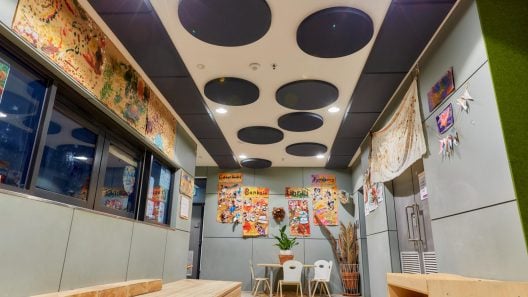
The foundation of our community feel starts with our physical environment. At The Harbour, we utilise a mixed-age setting and a shared outdoor space that encourages children to move and explore freely across different areas. This design ensures that children aren’t just grouped by age but are part of a social and educational ecosystem where learning is naturally aligned.
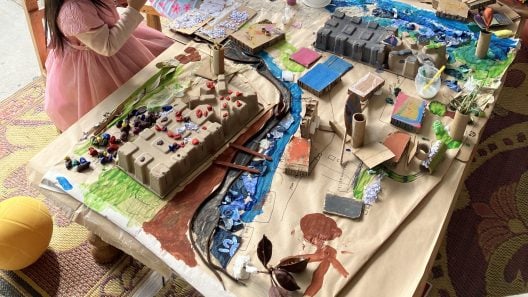
Philippa explains that this layout changes the way children interact with their peers and their surroundings. “The children—no matter what room they’re in—they interact, they engage in the same experiences; particularly project work, where all groups contribute,” she says, “this means that the service operates as one community, instead of different groups.” This alignment ensures that a younger child’s exploration of a concept is just as valued as an older child, creating a shared language of learning across the service.
Celebrating culture, learning, and diversity
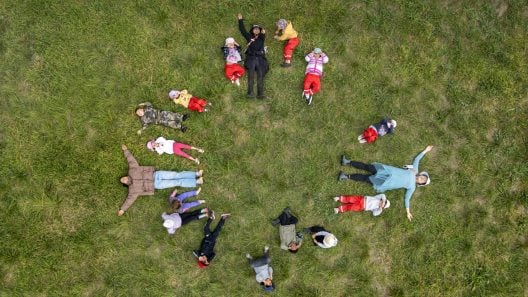
This sense of belonging is reinforced through service-wide group times. We see immense value in gathering together for special events and cultural celebrations that reflect our diverse community. These are moments where we affirm our shared identity.
“Because of the community feel, we see value in coming together collectively for whole service group times, like special events and other cultural celebrations which reflect our diverse community. For example, during Reconciliation Week, we host a whole-service Acknowledgement of Country,” says Philippa.
To make these moments successful, we ensure our entire team is aligned. As Philippa advises, “you really have to ensure that all educators are on the same page around the intent of coming together as a whole service. You need them to understand the benefits, the purpose and to have buy in. Once people start to see these group times as an opportunity to celebrate our diversity and our learning, it will become something which educators feel excited about.”
Organisation is also an important part of success. We plan our gatherings mid-morning, typically after morning tea when the children are fed and settled. We communicate these events to families well in advance, inviting them to participate and witness the community in action.
Keeping group times purposeful and meaningful
Being mindful of children’s needs, we understand that deep, focused learning typically occurs in smaller groups, so we keep our larger meetings brief and high impact.
“These group times are not used as a learning experience, but a forum to showcase learning and celebrate difference and diversity,” Philippa explains.
A highlight of this approach was our recent service-wide project on road safety. When we introduced bikes into our shared outdoor space it became a curriculum focus for everyone. The older children took on leadership roles, while the younger children learned through observation and direct mentorship.
“The kindergarten children created signs and used a whole-service group time to present them to the younger children,” Philippa shares, “They explained things like the direction to ride, where to park, and how to travel safely.”
Because every child, regardless of age, had been engaged in the road safety project, the group time was meaningful to each individual. This method supports a child’s sense of agency and belonging, proving that when we learn together, we grow stronger as a community.
Tips for running whole-service group times
To successfully implement these gatherings in your own service, consider the following strategies:
- keep it brief: ensure gatherings are short and purposeful. Children have varying concentration spans, so keeping the time “short and sweet” sets the group up for success.
- showcase learning: use this time to celebrate work and highlight shared experiences. This builds pride among educators and allows children to take on leadership roles.
- choose a location: select a space with enough room for children to sit independently. Consider factors like noise, visibility, and weather.
- engage families and partners: invite families to contribute ideas or participate in planning. You may also include local elders or other community partners to strengthen connections.
- define the purpose: ensure there is clear intention behind the gathering that aligns with your service philosophy and program.
- plan the timing thoughtfully: schedule gatherings when children are most settled. Mid-morning often works best, as children have eaten and are ready to engage.
- prepare for diverse needs: consider which children may need additional support and where educators should be positioned to manage sensory needs or transitions.
Reflective questions
- how do we currently create a sense of community across different age groups in our service?
- what kinds of events or celebrations could we meaningfully engage with as a whole service?
- what strategies can we use to ensure all educators understand the purpose and value of coming together?
- where do we have a physical space which could be used for a whole-service group time?
- how can we align whole-service gatherings with our ongoing project work or curriculum focus?