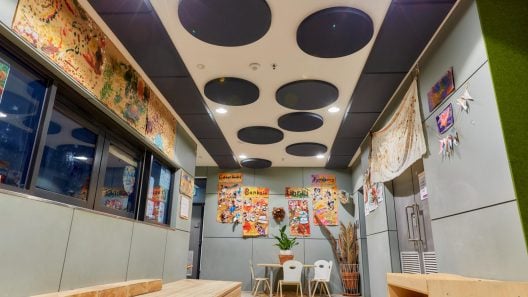
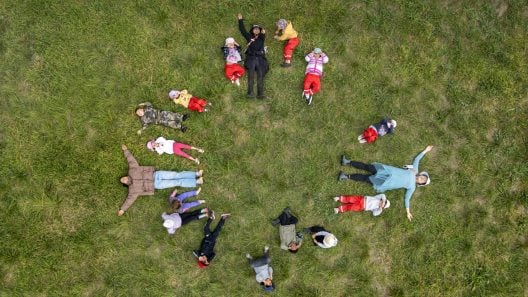
Our Gowrie Broadmeadows Valley (BV) site is co-located with Broadmeadows Valley Primary School, a setting which values strong community engagement. This shared commitment has led to a meaningful collaboration between Gowrie BV and the school in establishing the Broadmeadows Valley Primary School Community Hub and garden.
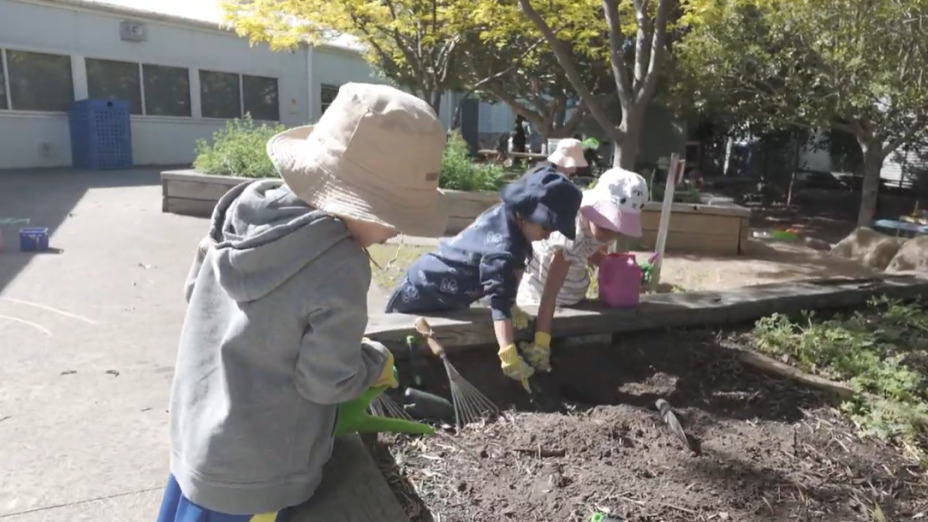
The Community Hub have a community garden program, where all members of the school and service can access it. Gowrie support the maintenance of the garden by running weekly visits to the garden, primary with the 3–5-year-old children. This program is led by Bassima, the Arabic language teacher, and supported by Elissa, a gardener from the Hub. The garden provides a rich and dynamic learning environment, supporting children’s physical and cognitive development while nurturing emotional and social growth. Bassima and Elissa offer hands-on experiences with nature that foster curiosity, responsibility, and patience.
Our weekly visits began when we went to feed the chickens and happened to see Elissa gardening. This led to a conversation about the children from Gowrie supporting her on the days she tends the garden. Four years later, we are continuing this meaningful excursion. The team have seen many benefits to the program; where children learn about responsibility and citizenship by working to maintain the garden- weeding, planting, sweeping, raking, collecting rubbish and caring for the chickens and worm farm. These weekly visits invite reflective thinking from the children as they observe the changing of the seasons, the life cycle of plants, and the interconnectedness of plants and animals. These learnings are bought back to the service, where children use their knowledge to care for BV’s own garden, teach their peers about sustainability, or further explore topics of interest. The sessions themselves often involve participation from families or community volunteers, which creates more opportunities for adults and children to work together; with adults extending children’s learning and responding to their curiosities.
Bassima and Elissa work together to ensure that the visits to the community garden are not tokenistic; they are interwoven with the learning occurring at the service. Because of this, they meet regularly to discuss the children’s learning; what’s been happening, what’s changed, and what we could do next. Celebrations which occur at the service are acknowledged at the garden; with learning around Anzac Day and Science Week taking place at the site.
Deeper concepts, like soil acidity and alkalinity, are unpacked with the children using a pH tester and thermometer. Through this, they learn that understanding soil conditions helps us choose suitable plants, improving the chance of successful growth.
For Bassima, these outings are also a wonderful way to teacher Arabic in an embedded, practical and authentic way. “I take every opportunity to talk about what we see and do, using Arabic to describe colours, textures, shapes, and sizes,” she explains. “For example, I model language by narrating our activities; telling the child that I’m watering a plant or planting a seed.” The consistency of these weekly visits allows for repetition, which aids children in becoming familiar with key terms and building the confidence required to use them.
Importantly, the Arabic language learning continues beyond the garden. Indoors, children often re-enact what they’ve experienced, using Arabic vocabulary and phrases in pretend play. By embedding language learning in real-life, hands-on contexts, we build a strong and enjoyable foundation for bilingual development.
Reflective questions:
How can I involve family or community members in ways that enrich children’s experiences?
How can I better support children to notice and appreciate changes in the natural world around them?
How can I encourage a sense of responsibility and care for living things in the children I interact with?
How can I use every day experiences—like gardening or outdoor play—to spark curiosity and conversation?
How can I better recognise and celebrate the role of community in children’s learning?
Explore Related News
Discover more ideas, stories and sector insights
Explore more news, stories and updates from across Gowrie Victoria, including insights from our early learning communities, professional learning, training and sector partnerships.
At Gowrie Docklands Kindergarten (GDK), children from one group had begun building their own Melbourne landscape, and it became the starting point for another group's exploration of what Melbourne means to them.
Senior secondary students from 13 government schools spent five weeks finding out what a career in early childhood education looks like day to day, through the second phase of the Introduction to Early Childhood for School Students program.
In July, a child in the Room 1 at our Gowrie Docklands Kindergarten site asked the educators why they can’t have real fire at the service. Rather than shutting the idea down, educators used it as a starting point for a longer project.
Earlier this year our Carlton Learning Precinct (CLP) service received a Victorian School Building Authority grant to address acoustic issues in the outdoor areas and the kitchen corridor, where excessive noise had made it challenging for our children and educators to communicate.
Wednesday 2 September was Early Childhood Educators’ Day, and teams across our services received many lovely and kind messages from children and their families thanking our educators for all that they do.
The Gowrie Victoria website is not compatible with Internet Explorer. Please use a modern browser such as Chrome, Firefox, Edge, or Safari for the best experience.