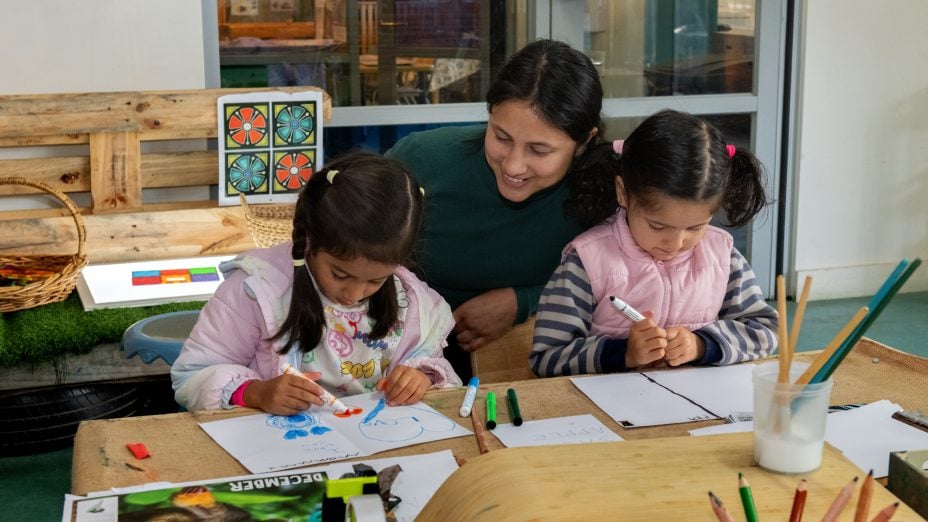
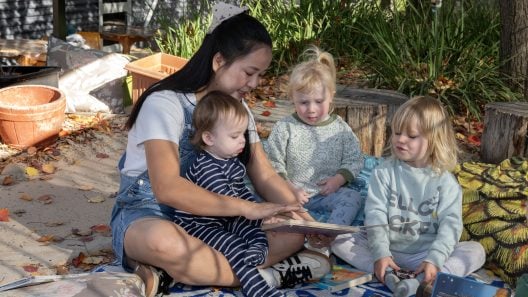
Transitions—whether it be into a long day care setting, or from kindergarten to school—can be a challenging time. Here are three simple strategies we use to help your child transition to school—and that families can easily adopt at home—to guarantee your child steps into their new environment feeling strong, connected, and ready to learn.
Build a sense of belonging & familiarity
Uncertainty can be overwhelming for young children. If it feels like the new school is a mystery, this can bring with it negative feelings or anxiety. Our goal is to help children feel the new environment isn’t a new place, and to build a sense of belonging over their school. To make it feel like it’s theirs, we can start shifting our language. For example, instead of saying, “The school you will go to,” say, “That’s your school!” This simple change immediately grants them a sense of ownership.
- Visit the school: Use the next few months to make the grounds familiar. Use the playground on weekends, attend casual events, or even just walk by regularly. The more they see the building and grounds in a relaxed context, the more comfortable they will feel.
- Focus on the similarities, not the differences: We can do this so easily, through saying things like “You get to pack your lunch box at school, just like you did at kinder!” or “Look, the school has a slide, just like kinder did!” This supports the children to feel that not everything is unknown,
- Use dramatic play: We know that children test out theories, experiment with power, and re-enact things from their real life through play. At our Gowrie services, children engage in role play around school—pretending to be a teacher, pack their backpack, and so on.
Build agency and model resilience
Children feel stronger and more capable of handling big changes when they feel they have control over the process. We call this building agency—we do this all day, every day at our services. When we give choice, children often feel more secure.
- Empower them: It can be tempting to have all your child’s school supplies to arrive as Christmas gifts, however giving a child the power to choose simple school supplies—like their own lunch box, pencil case, or backpack—helps them feel a sense of control over the exciting changes ahead. This boost in confidence is so valuable to them.
- Model confidence: Instead of stressing over potential worries that the child might have, focus on modelling resilience. Share a small story about a time you felt worried but managed it (like trying a new coffee shop). Point out when things are unexpected but you handle it smoothly: “Oh, the library is closed! That’s okay, we can try another time instead.” This teaches them that feeling nervous is normal and that they have the skills to successfully navigate new situations.
Build strong connections
Strong relationships are one of the most important ingredients for a smooth transition. A familiar face can turn a scary first day into something exciting.
- Organise catch ups: If you know other children who will be attending the same school, set up regular catch-ups now! Knowing a few friendly faces are waiting at the new setting provides a secure base.
- Get familiar with new people: Does the new school have photos of their teachers on the website? Spend time looking at the pictures and saying the names. This makes seeing them in person a much less scary experience.
- Ask your kindergarten if they partner closely with local schools. For example, Broadmeadows Valley and Docklands Kindergarten go on regular visits to the neighbouring school grounds. Additionally, we often invite Foundation teachers from local schools to visit our kindergarten settings. This allows the children to meet their new teacher in an environment where they feel most comfortable.
The transition to school is a significant milestone, and it’s most successful when it is a shared, strategic effort. By implementing these three simple steps—Belonging, Agency, and Connection—you are equipping your child with the competence and excitement they need to embrace all the wonderful opportunities ahead!
Reflective questions:
- What familiar experiences or objects can I highlight to support a child’s confidence during transitions?
- What opportunities can I create for children to visit their new school or service before they begin?
- How can I involve children in decision-making about school supplies or routines?
- Do I model emotional resilience in everyday situations, and how might I do this more intentionally?
- How do I talk with children about feeling nervous or excited, and how could I deepen these conversations?