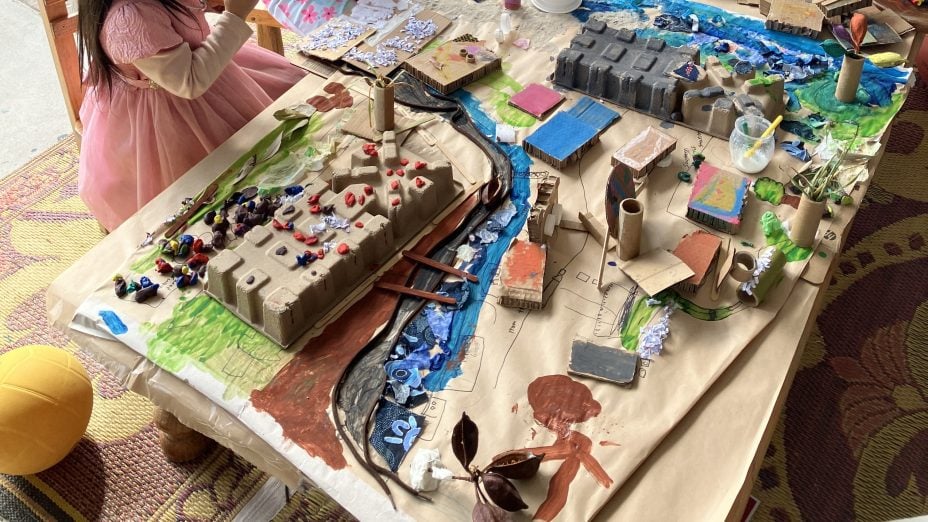
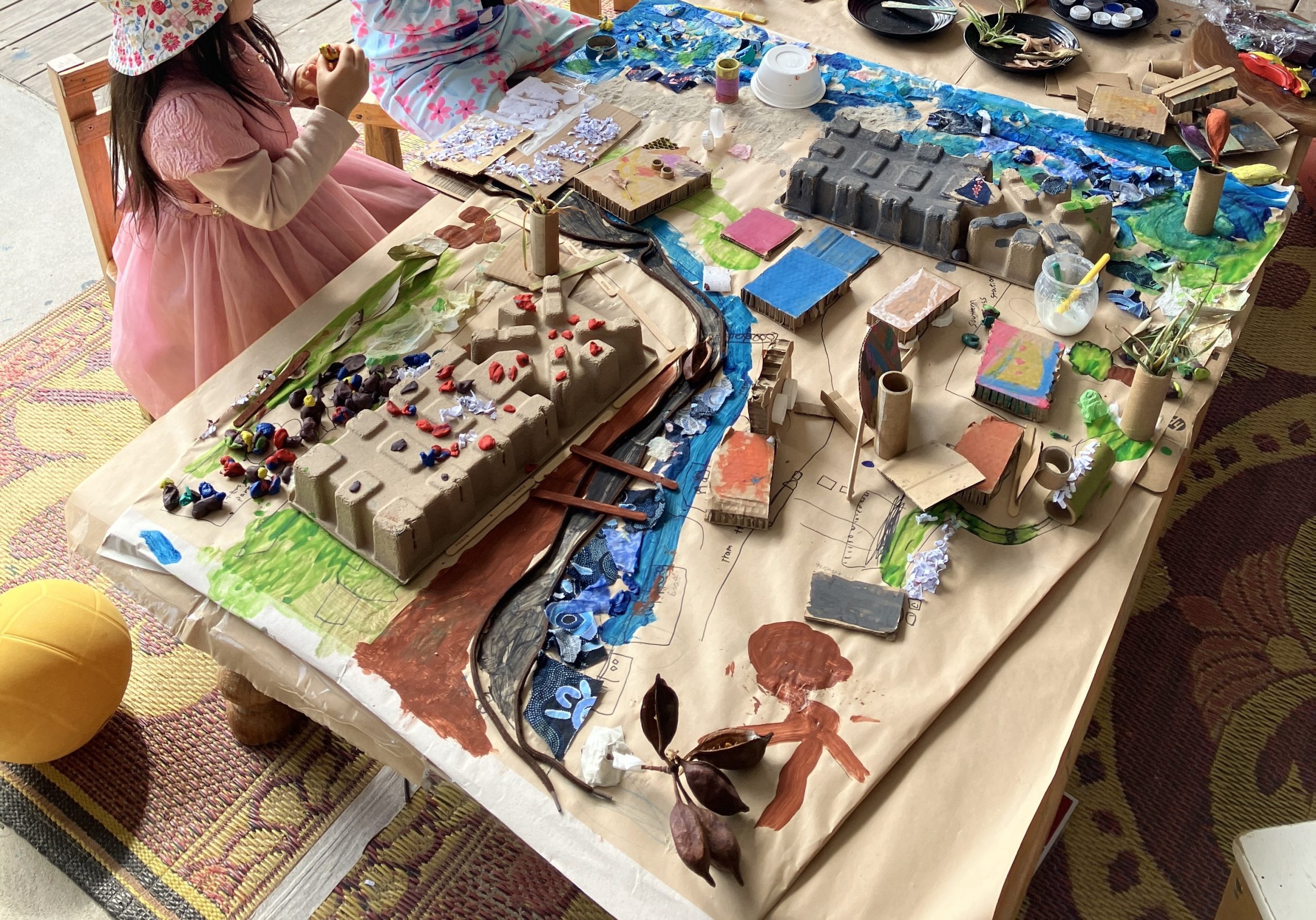
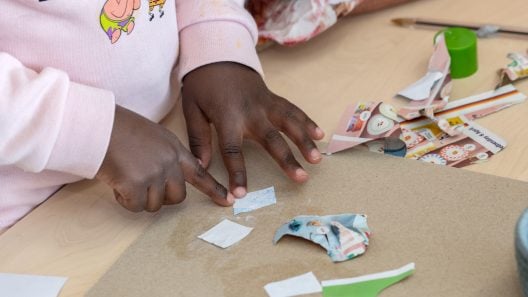
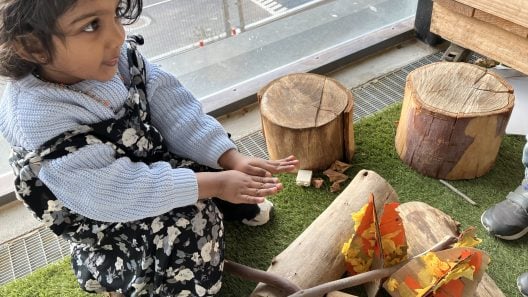
The children worked on the landscape over three days, picking it up again each morning and building on what they’d added the day before. Their ideas kept developing as they noticed what the other children had created and thought of new things to contribute. The educators provided cardboard in different shapes and textures, cardboard rolls, dried leaves, bottle caps, plasticine, popsicle sticks, and scrap fabric. Cardboard rolls became tree trunks. Bottle caps worked just as well as car wheels, and scraps of blue fabric turned into a flowing river.
“What stood out for me as their teacher was how much the children noticed from their own everyday experiences,” says Jeslin, ECT in Betayil Group 2. “Children who travelled in cars wanted to add cars, and children who lived in apartments wanted to make apartments, painting them the same colour as their own homes.”
“The children found their own way to solve problems with the materials available to them,” she continues. “What surprised me most was how much of their own lives came through in what they built.”
Through the project, the children practised recalling their experiences and describing the places that matter to them. They also worked through planning, negotiating, and decision-making as they figured out which materials could represent their ideas. The landscape itself has grown too large to display for families, but the team have written up a reflection in their classroom reflection book, available for parents to read. As a team, they’re now thinking about extending the project by connecting it to Country, encouraging the children to consider what the land may have looked like before the buildings they know today.
Children at GDK have explored their relationship with the local area before. In Five ways to build community, another group at GDK worked through what it means to make their presence known along the NewQuay Promenade, finding their own ways to show the local community that the waterfront matters to them too.