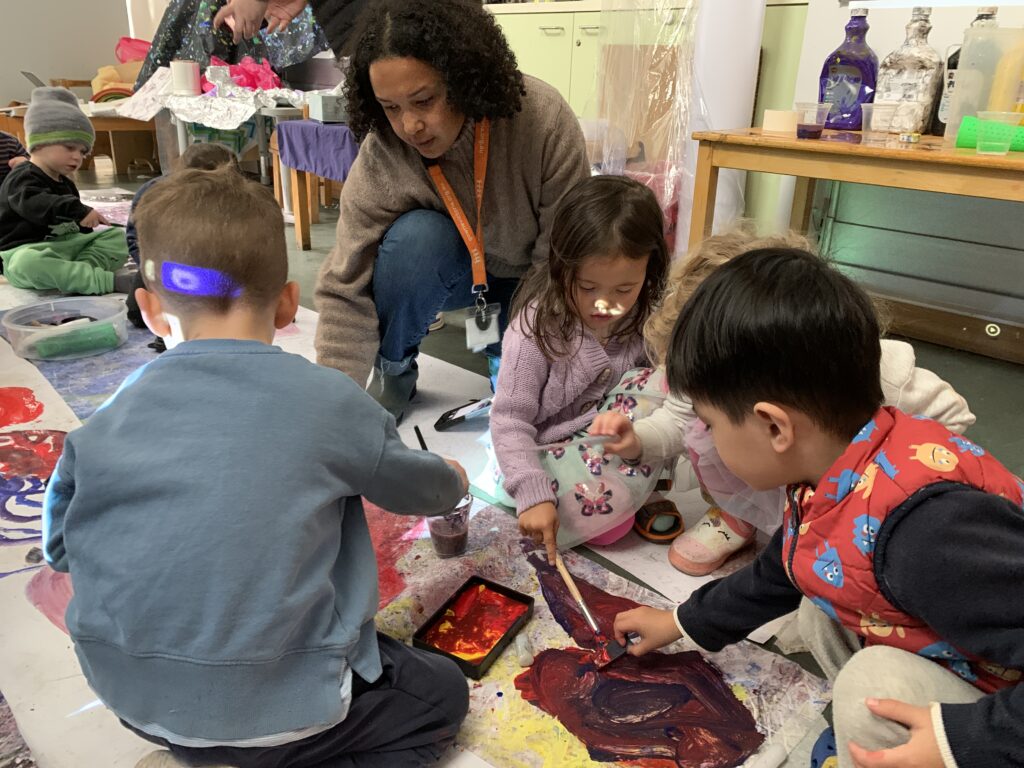
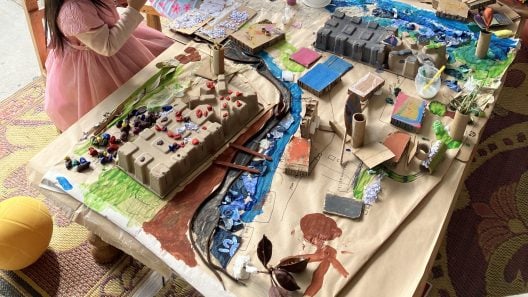
Early Childhood Teachers Rosie and Mags from Gowrie Clare Court, along with Janine, a grandparent from the Rainbow Lorikeet Room, worked together to offer a rich and dynamic multimodal art workshop focused on the children’s enquiry into rain. Janine is also an art teacher and Indigenous woman who was eager to support the service in their creative exploration of rain.
Using multimodality to explore rain through senses, movement and materials
Multimodal play as defined in the Early Years Learning Framework refers to “children and educators using the many different types of resources and materials around them that can potentially be a mode to communicate and make meaning.” This rain experience brought together a range of modalities; projected images and videos, sounds of rain and thunderstorms, paper, fabric, sponges, paintbrushes, paint, water, wax candles, foil, and stamping materials. The projected images of rain clouds, storms, and the children’s own footage of the neighbouring Cruickshank Park in the rain, added another layer of interest. One projector, pointed to the floor, where the paper lay, cast textures and colours onto the paper.
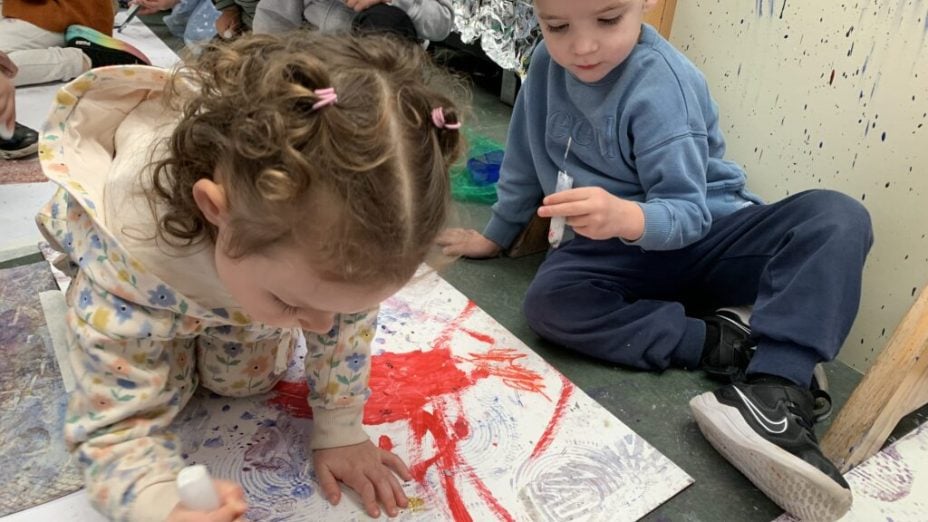
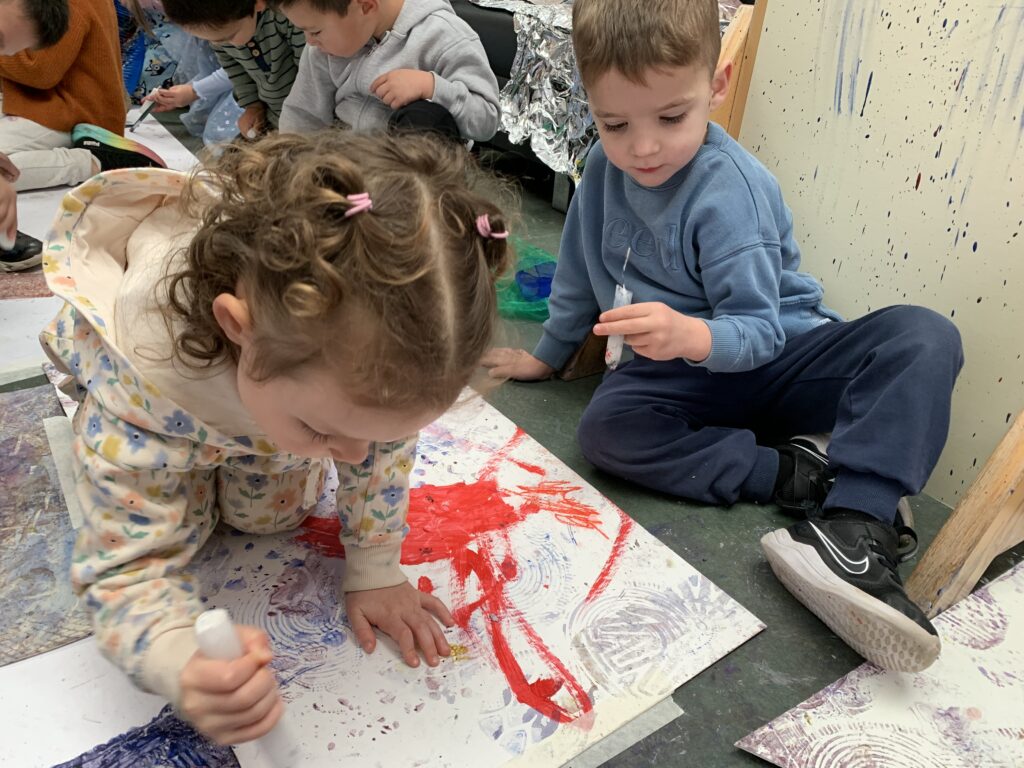
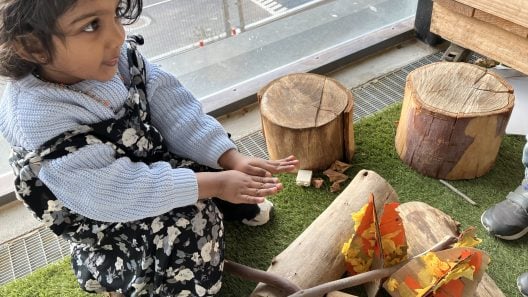
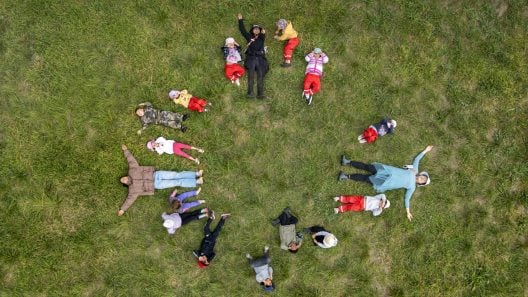
This experience was oriented around process art; where the focus is on creating meaning through art, rather than the result at the end. “This experience felt relaxed and familiar, and the children responded with real openness,” says Janine, “there was no pressure to produce an outcome – it was all about process and play.” When asking the children how the rain moves, there was an enthusiastic response from a child, who called out “it falls down with gravity!”. From this, the children explored rain movements with their bodies; moving down, around, quickly, slowly, heavily and lightly. They also explored the movement of rain and how to create it on white paper using the wax candles.
“For weeks, rain has been woven into the program through many experiences. But the re-enactment of making rain inside was a highlight for children,” says Rosie.
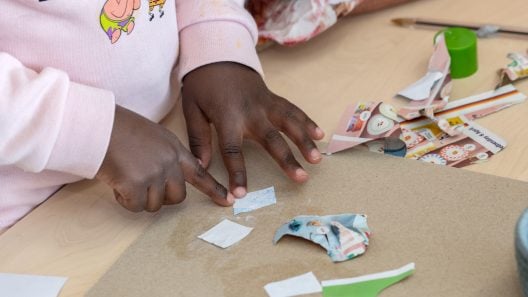
Using paints with tools such as sponges, brushes and rollers, the children explored making single, heavy raindrops; twisty windy rain, lighter, more frequent drops, and torrential rain, where it comes down in sheets. The children engaged in this experience with a range of styles, working together or independently. They mixed the colours, with one child remarking “this is a dark colour now, like in a storm”. Some children moved slowly, listening to the background music, while other children responded to the storm imagery, racing through, creating sheets of rain.