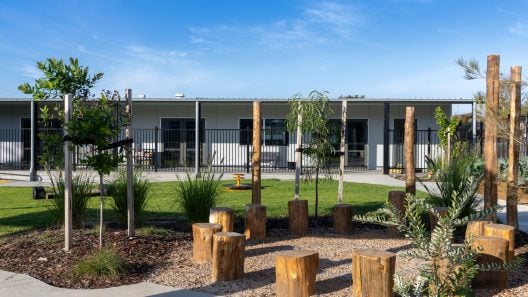
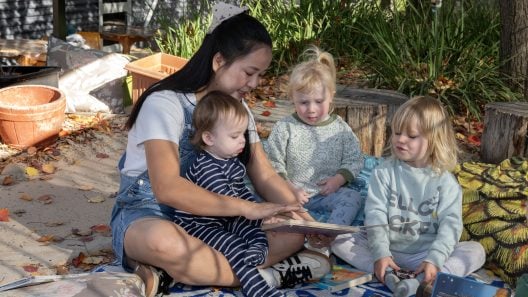
The use of fire pits in early childhood programs are a wonderful way to explore how risk and benefit work together in early childhood education and care.
Gowrie strongly believes in the importance of learning taking place in both indoor and outdoor environments. Because of this, each Gowrie service runs an indoor and outdoor program, with children free to explore all areas as they please. When both environments are seen as equally valuable, yet offering different benefits, amazing things can happen.
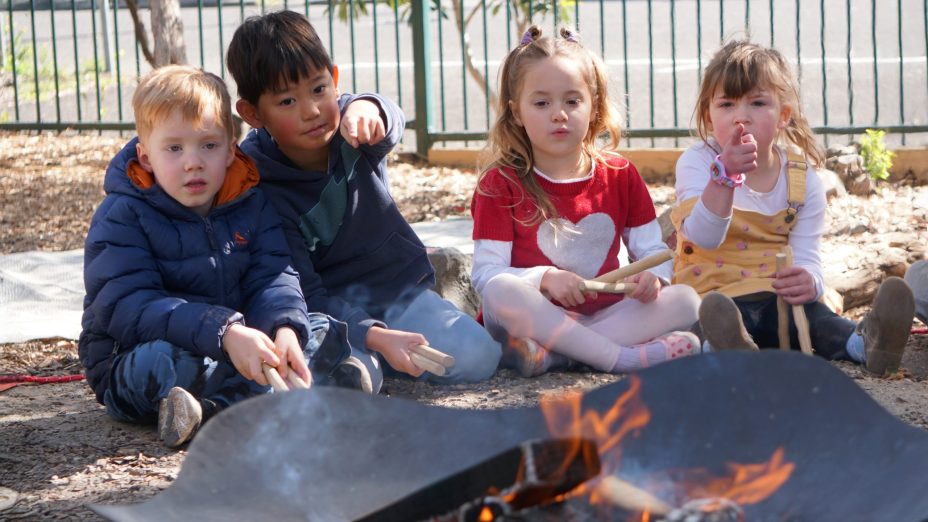
At our Carlton North service, the use of fire pits is one extension of this philosophy. It offers opportunities for children and educators to come together and share moments of connection. This might be through an Acknowledgement of Country or while cooking together. Evie, Early Childhood Teacher at Carlton North, explains, “Because fire plays such a central role in Australia’s environment and culture, we want children to understand its importance—and to learn that, when managed safely, it can be a positive force.”
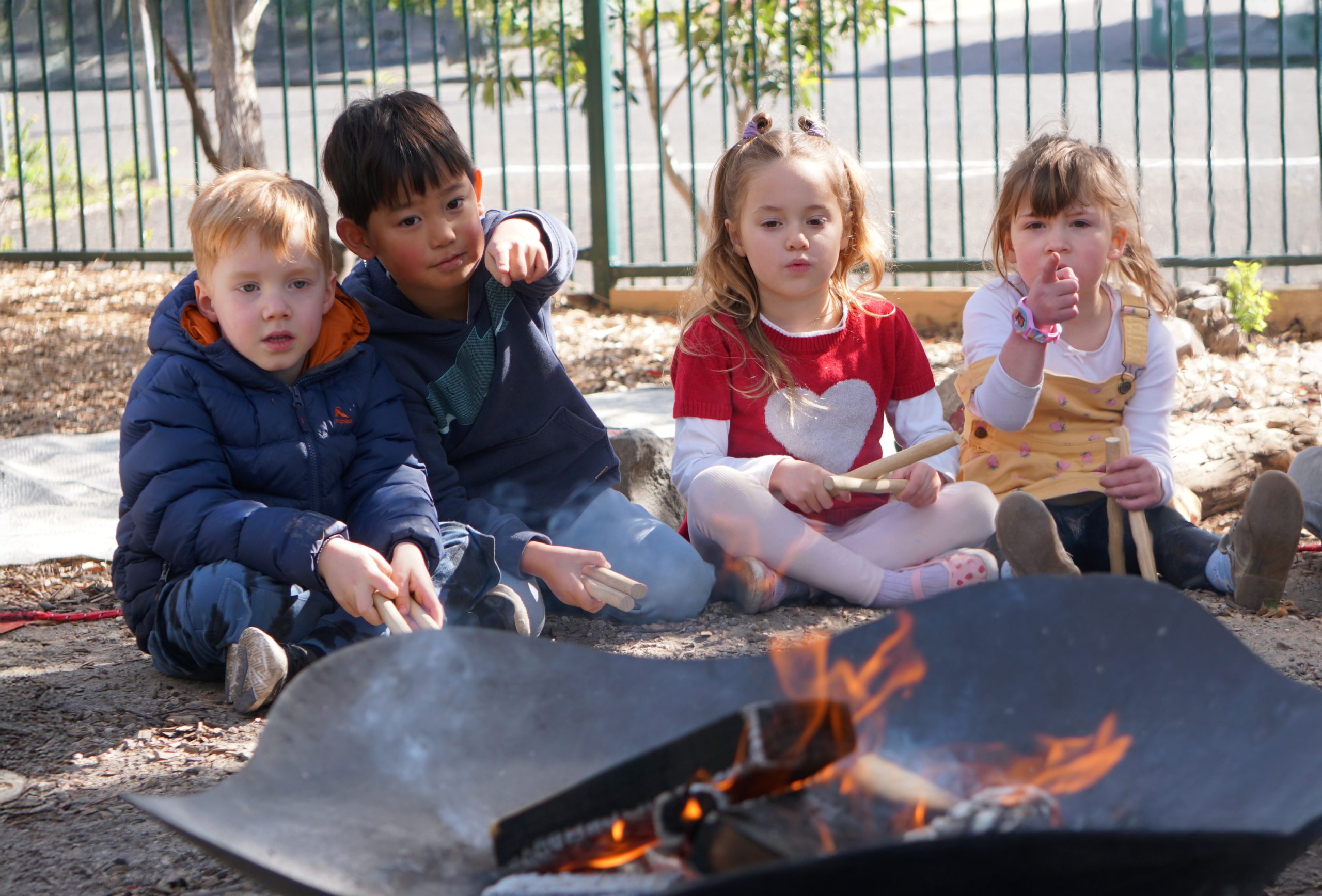
Across all Gowrie services, educators note the power of fire as a time to gather, share stories, and yarn. “It’s a time for us to come together,” says Jacob, an educator from Carlton North. “Children share stories from their lives and experiences with fire, and we chat about camping.”
Learning about risk in authentic ways
Balancing risk with high expectations when running a fire pit experience relies on intentional teaching, thoughtful planning, and scaffolding children’s learning. Educators establish clear boundaries that allow children to assess risks and explore safe ways to manage them.
When introducing children to fire, educators discuss its many uses and importance in daily life. They highlight how fire can be used for cooking, storytelling or dance, and that understanding how to create and control fire can be a vital survival skill.
Having fire as part of the program enables children to learn about risk in meaningful, authentic ways. Safety is embedded in every stage of practice, with children contributing to shared decision-making. Together, they assess whether the weather is suitable, review the risk assessment, and consider factors like wind, emergency equipment, and individual health needs such as asthma.
Consistent expectations across all rooms, including with the under threes, mean everyone understands how to engage safely around the fire pit. This consistency has helped Carlton North embed fire use as an intentional, rich, and purposeful learning experience for all.
Fire as a tool for learning about Country
The use of fire in early childhood programs also provides a powerful way for children and educators to learn together about Country. “Fire needs wood to eat and air to grow and spark to come to life,” says Jacob. This simple explanation helps children connect with the four elements of nature: fire, earth, air, and water.
During fire pit experiences, one educator always stays close to the fire, not only to monitor its strength but to engage children in conversations about cause and effect. Educators might use long tongs to pick up a small piece of wood, showing how it changes from brown to black as fire transforms it into charcoal. These moments spark curiosity, imagination, and creativity—creating countless small but meaningful learning experiences.
At Carlton North, the fire pit is also part of broader community connections. The service hosts community picnics where families gather, tend to the fire with their children, and yarn together. Children take their learning beyond the service too, applying their understanding of fire safety at home, especially during summer camping trips.
Tips for introducing fire pits at your service
- Start with the why
Before introducing fire pits, identify your purpose. Once you’ve established your ‘why’, it becomes easier to link the experience to your program and engage your team in the process. - Check with the council
Different councils have varying rules about open fires. Before developing policies or purchasing equipment, confirm that fire pits are permitted in your area. If you’re part of an Early Years Management organisation, you’ll also need to check internal policies. - Do an audit of the environment
Ensure there’s a suitable outdoor space where a fire pit can be used safely, free from overhanging trees or tripping hazards. You may need to make adjustments to create a clear, safe area. - Visit services that use fire pits
Learning from others is invaluable. Visit services that already use fire pits, attend network meetings, or speak with your Kindergarten Improvement Advisor (KIA) or Pre-School Field Officer. Many services are happy to share their policies and risk assessments. - Plan and create a policy and risk assessment
Develop clear documentation to guide best practice. Your policy should outline when and how fire pits are used, for example, not lighting fires on windy days. Involve all staff in creating and reviewing it. Your risk assessment should identify potential risks and the strategies to mitigate them, such as staffing ratios, weather conditions, and safety equipment. - Ensure staff feel comfortable and confident
Educators are central to the success of fire pit experiences. Make sure all staff understand the policies, procedures, and risk minimisation strategies in place. Clear expectations and consistent messaging help children, families, and educators to feel safe and informed.
Reflective questions:
- How do we support children to understand and manage risk in authentic, real-world ways?
- What does “balancing risk and benefit” mean in the context of my service?
- In what ways do my own attitudes toward risk influence the opportunities I provide for children?
- What strategies can I use to involve children in shared decision-making about safety and risk assessments?
- What policies, procedures, or training would help my team feel more confident in managing risk-rich experiences?