“I only know one thing… excited.” Five-year-old Frank summed up what starting school feels like for many children at Gowrie Clare Court. Our team wanted to know what sits underneath that excitement, so they asked the people who see it every year: Prep teachers at the local schools.
Educators at Clare Court build their understanding of school readiness through years of relationships with children and families, and through reflective conversations grounded in professional knowledge. But the community around the service keeps changing, and with change comes new questions about what a positive start to school looks like today. Our team had their own observations, and they wanted to know how real‑world data and feedback from schools could strengthen their understanding of children’s learning and development.
Earlier this year, Clare Court sent a survey to Prep teachers at its three main feeder schools in the local area. Teachers were asked directly what skills, dispositions and capabilities matter most when a child moves from kindergarten into Prep, and where the kindergarten’s programs could better support that move. Two of the questions asked: “What dispositions support children in their transition to school?” and “Can you provide specific examples of how our kindergarten programs can better support school readiness and positive transitions to school?”
What the data showed
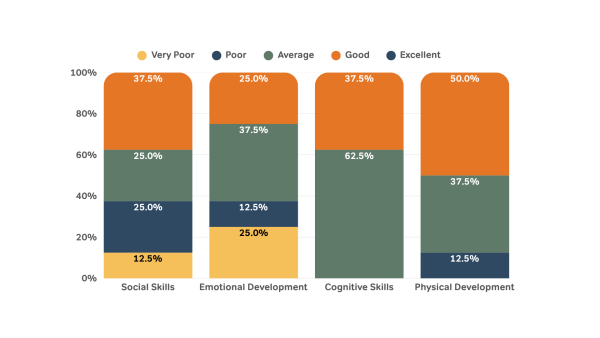
Asked to rate children’s preparedness across four developmental areas, teachers rated cognitive skills the strongest, with every child marked average or good and none marked poor. Social skills and emotional development told a different story, with 37.5% of children rated poor or very poor in each area. Physical development sat in between, at 12.5% poor.
When teachers were asked to rate how essential specific skills are for a positive transition, self-help skills topped the list. 62.5% of teachers rated self-help skills essential, well ahead of basic literacy and numeracy. Communication skills scored strongly too. Not one teacher rated communication merely important; half called it very important and half called it essential.
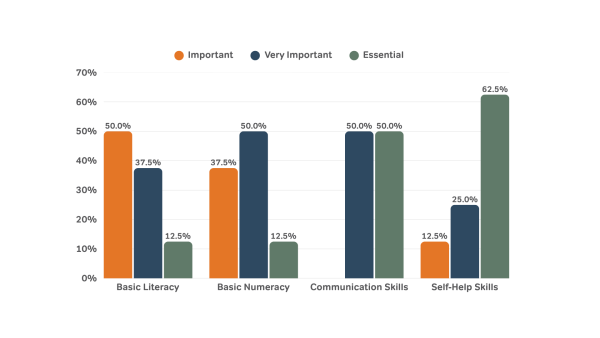
The pattern lines up closely with the Victorian Early Years Learning and Development Framework’s focus on wellbeing, identity and relationships. Emotional regulation, confidence, cooperation, turn-taking and positive peer relationships sit right at the centre of a good start to school, alongside the academic basics.
Asked what dispositions support a child moving into Prep, teachers pointed to resilience, patience and cooperation with others. One wrote about children “giving new things a go, being flexible and being brave.” Another was more practical: lunchbox practice, labelled clothing, fine motor development, sustained group time stamina, and growing independence with a bag and belongings.
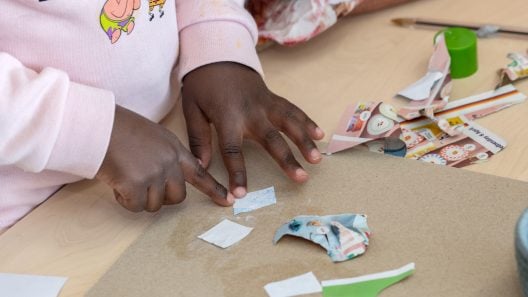
Teachers were just as specific about how Clare Court’s programs can help. Suggestions covered letter and sound activities and counting games, cut and paste tasks for fine motor development, cooperative games and role play for social skills, guided conflict resolution for emotional development, and everyday practice with managing belongings and following instructions.
What’s changed since
The findings were shared across our whole Clare Court team, including educators in the 0–3 rooms, so the same understanding of school readiness runs through every program, not only the kindergarten room. Educators received a summary of the key findings alongside practical examples for building these skills and dispositions into daily routines, and Clare Court has built closer relationships with the three schools this year, inviting Prep teachers to visit and spend time with the children in an environment already familiar to them.
Families at Clare Court often ask educators what school readiness looks like and how to support it at home. The survey findings now shape those conversations directly, and our team is building them into its Kindergarten Information Night presentation and booklet, so families leave with a clear, practical picture of what schools value and how they can support their child’s confidence and independence.
Amanda, one of our ECTs at Clare Court, says the survey reflects something bigger than the data itself: “The survey is a representation of the trust and connection we have built with our local schools. It reflects the strong relationships we have developed over the years and our shared commitment to supporting children as they transition into school. It has provided us with valuable insights and opened the door to ongoing conversations and collaboration, strengthening the connection between Clare Court and local schools.”
Sheemal adds: “When receiving the survey results, it highlighted how important our role is in supporting children to build key skills, not just for school but skills for life. It reinforced the importance of giving children opportunities to develop their independence, confidence, resilience and social and emotional skills in everyday moments.”
If your service is exploring how feedback from local schools could shape your own transition programs, you are welcome to get in touch with our Clare Court team at clarecourt@gowrievictoria.org.au
Read more: Three Ways to Help Your Child Transition to School