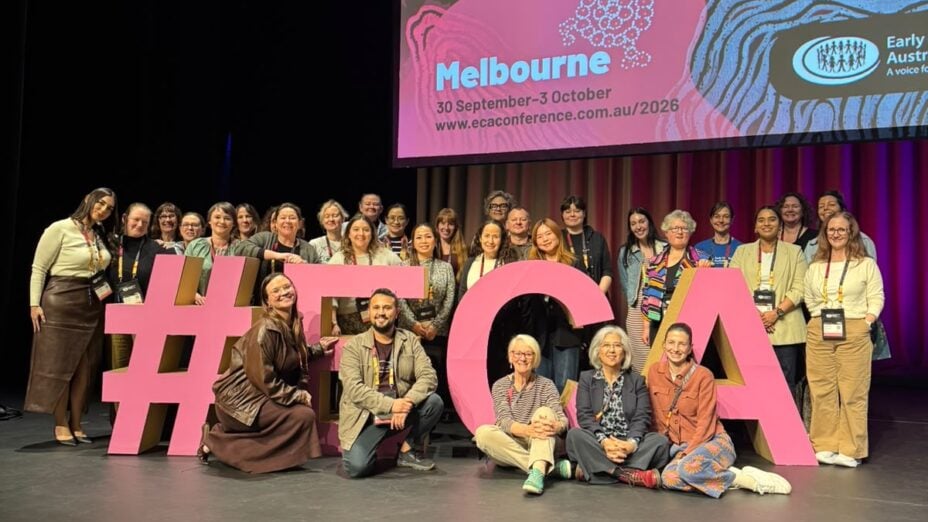
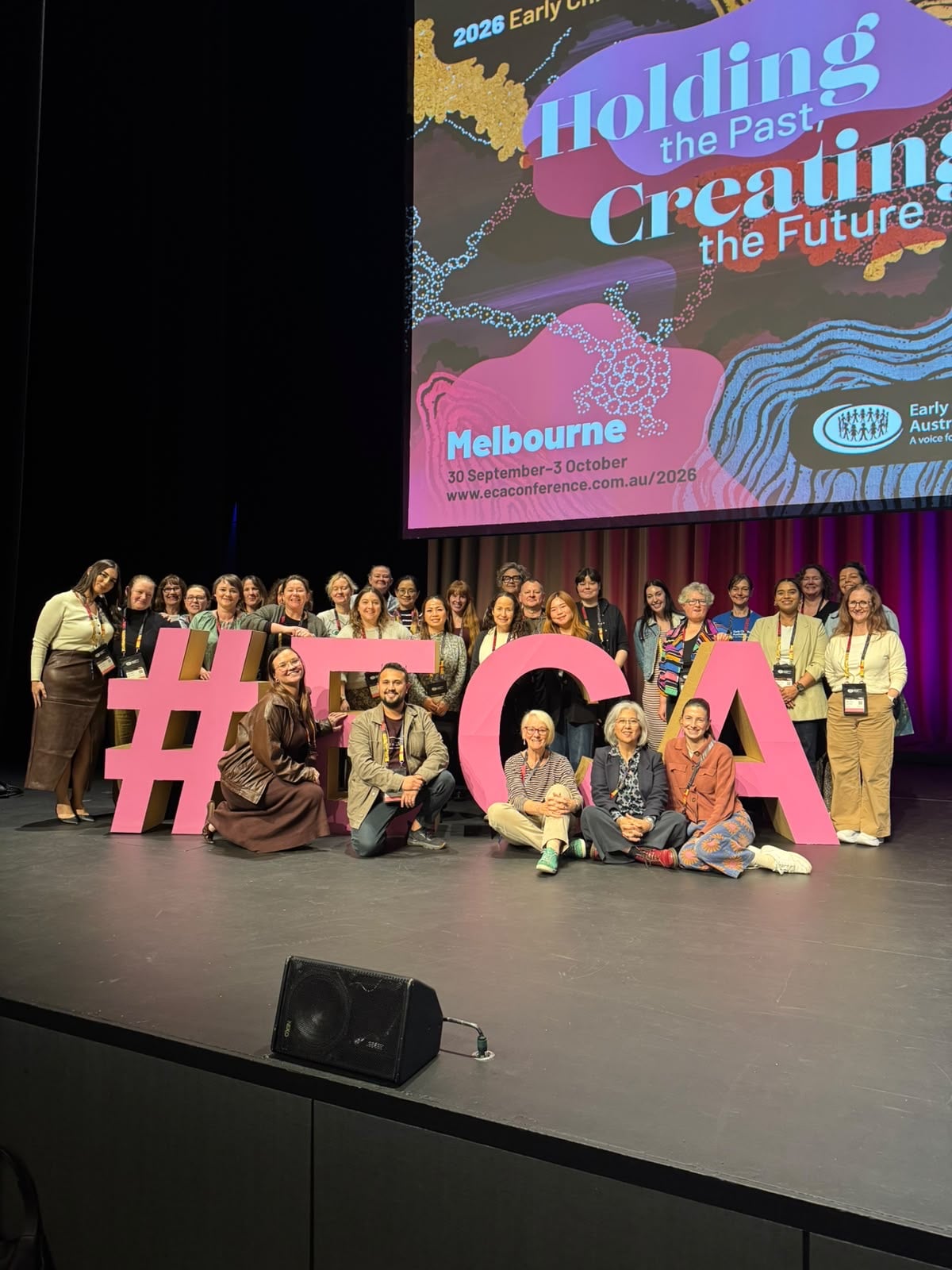
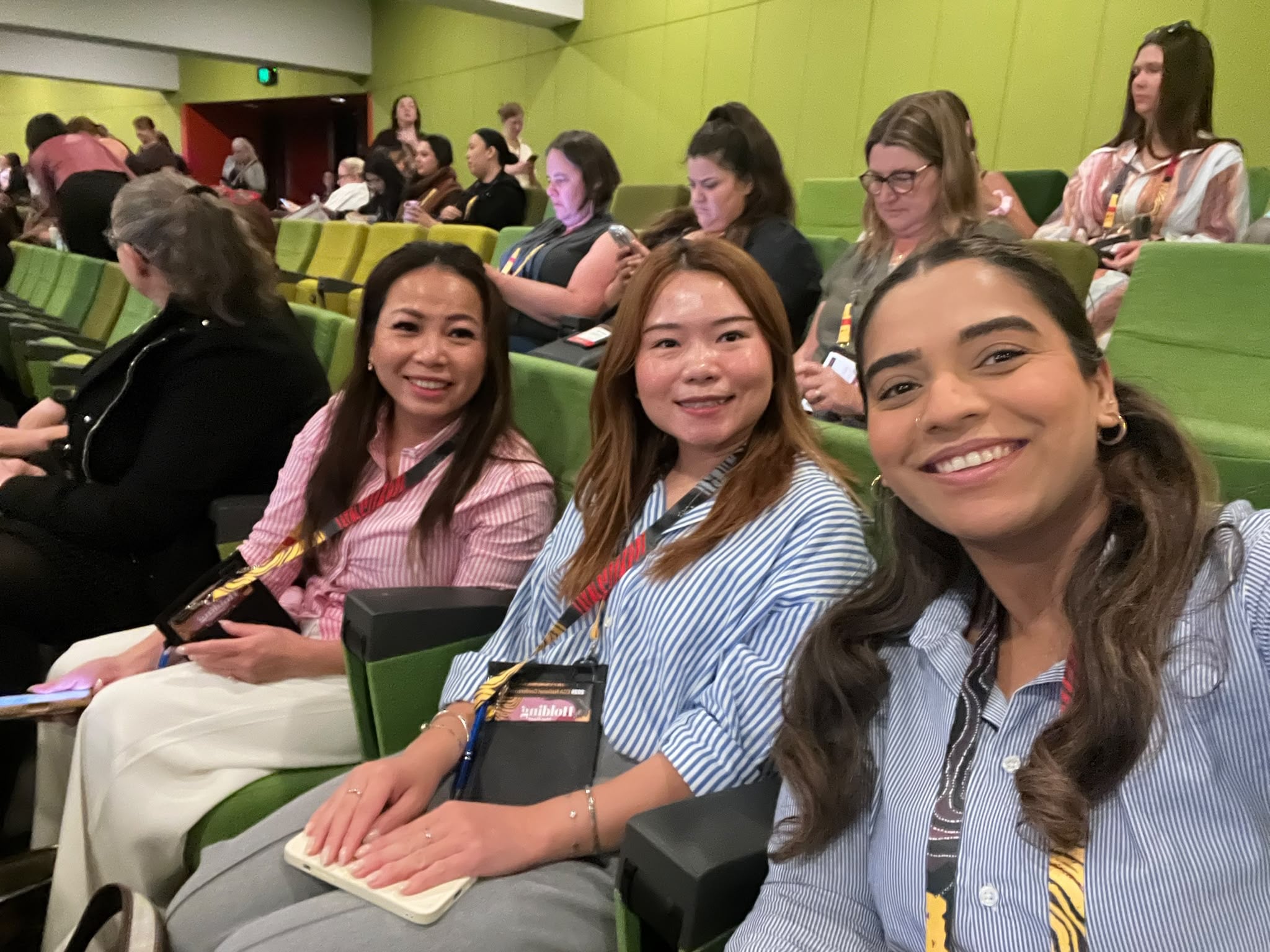
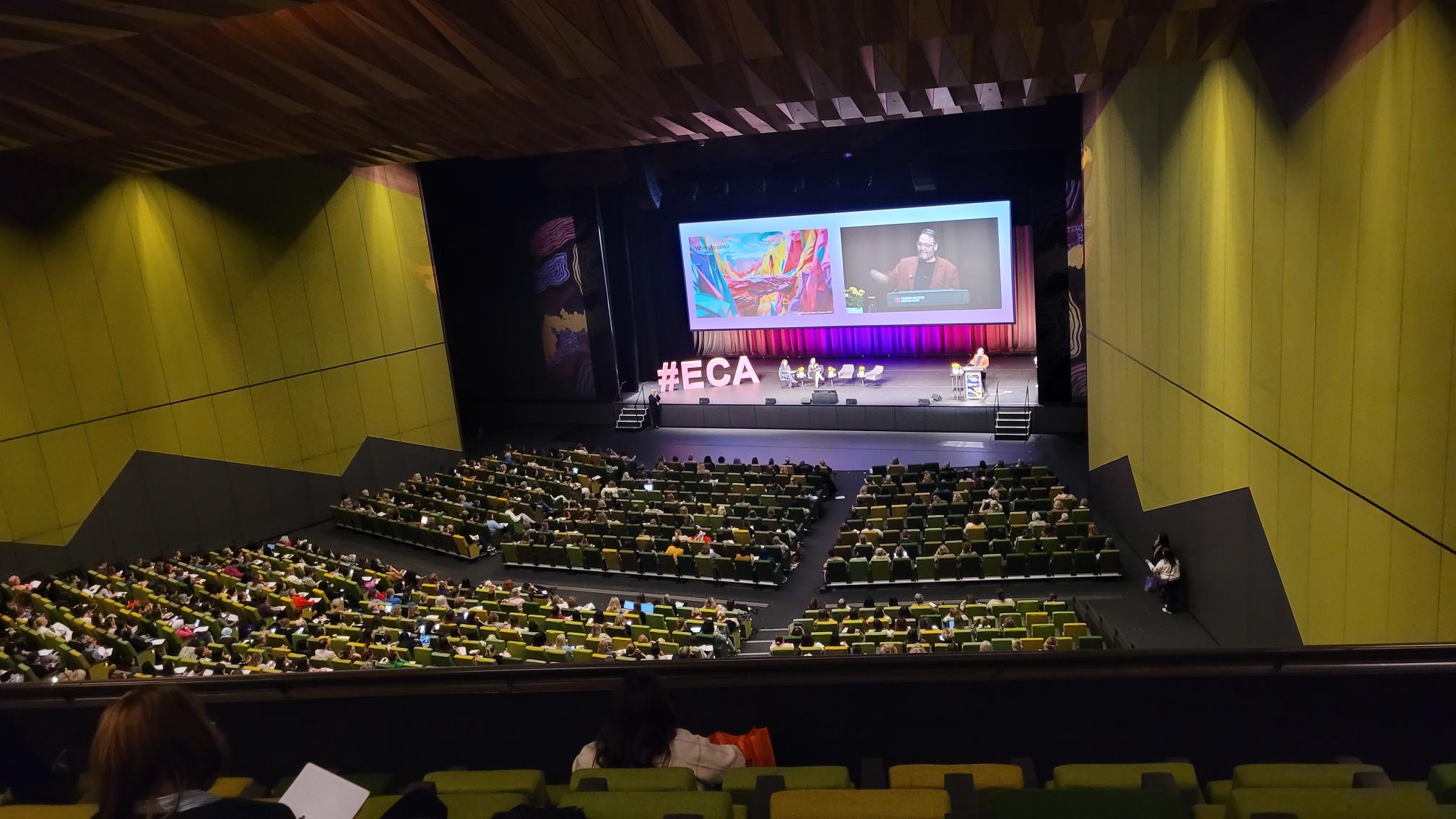
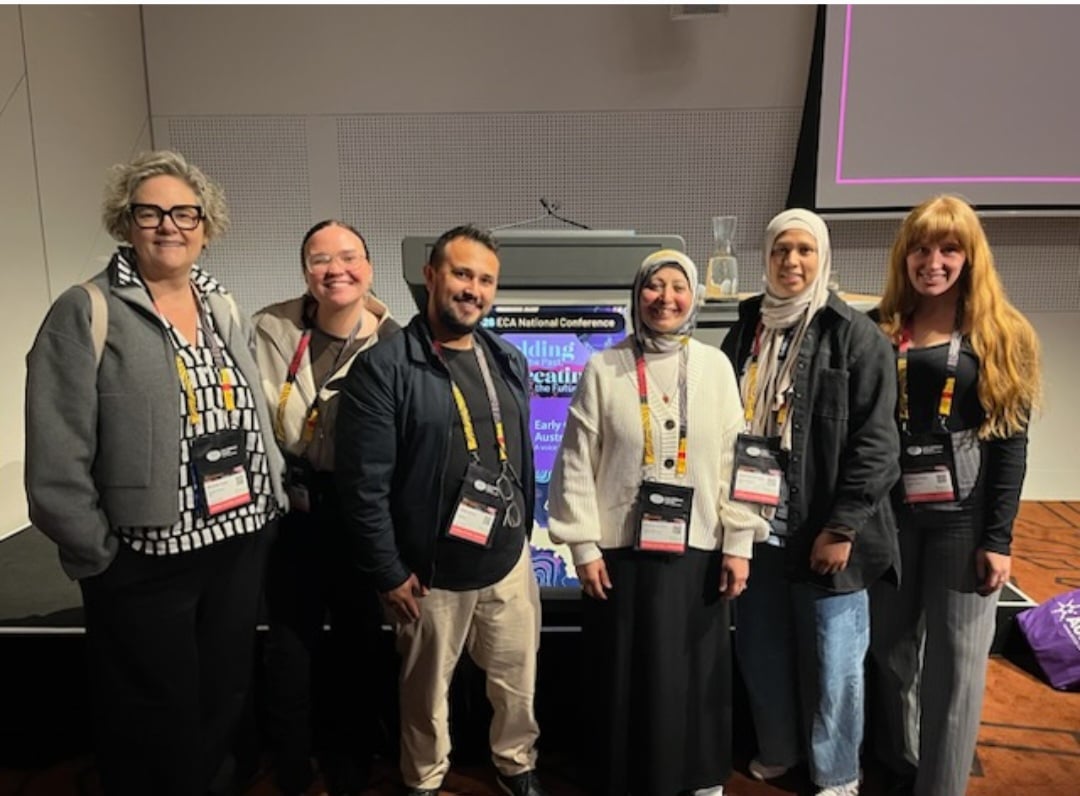
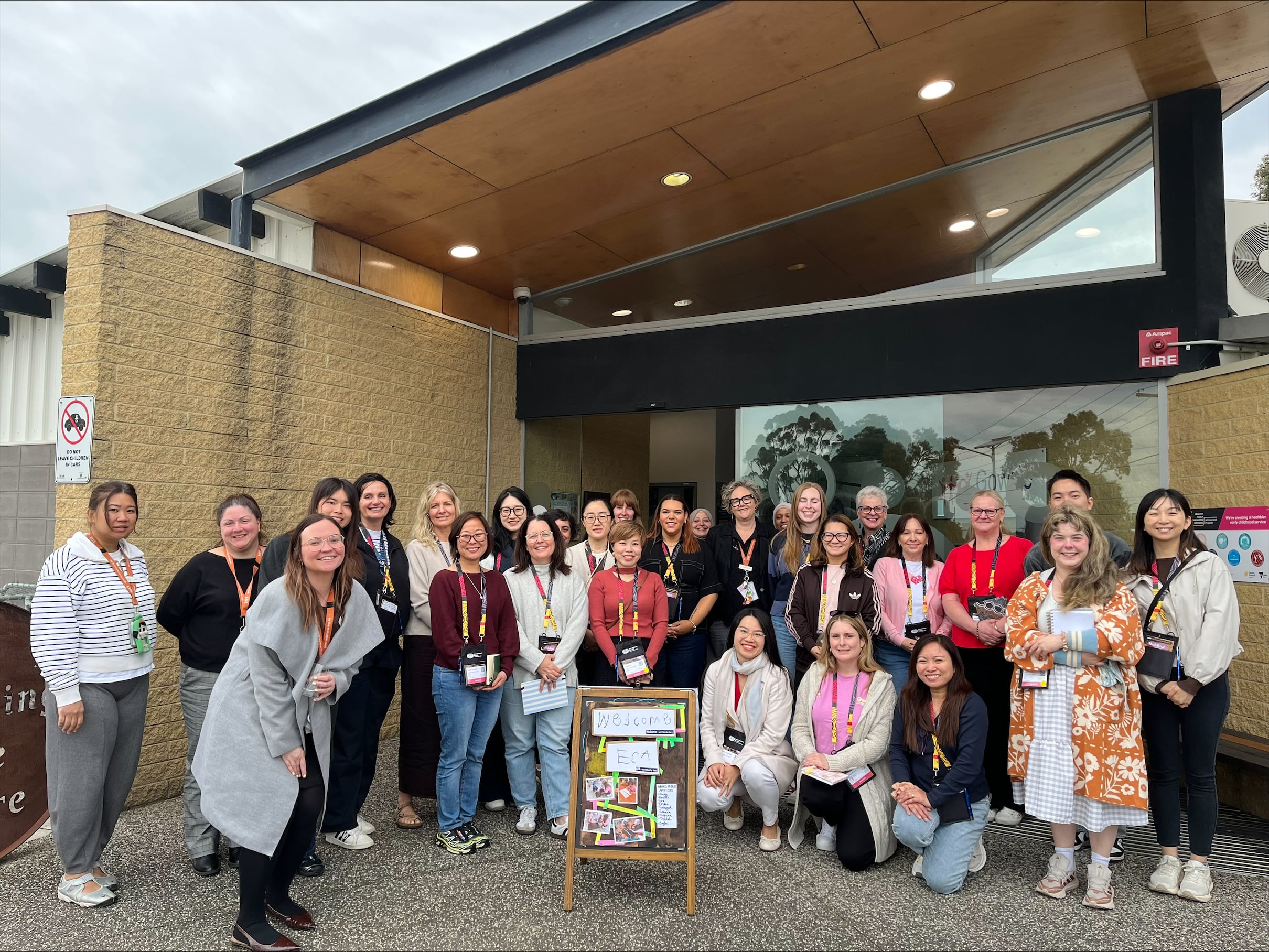
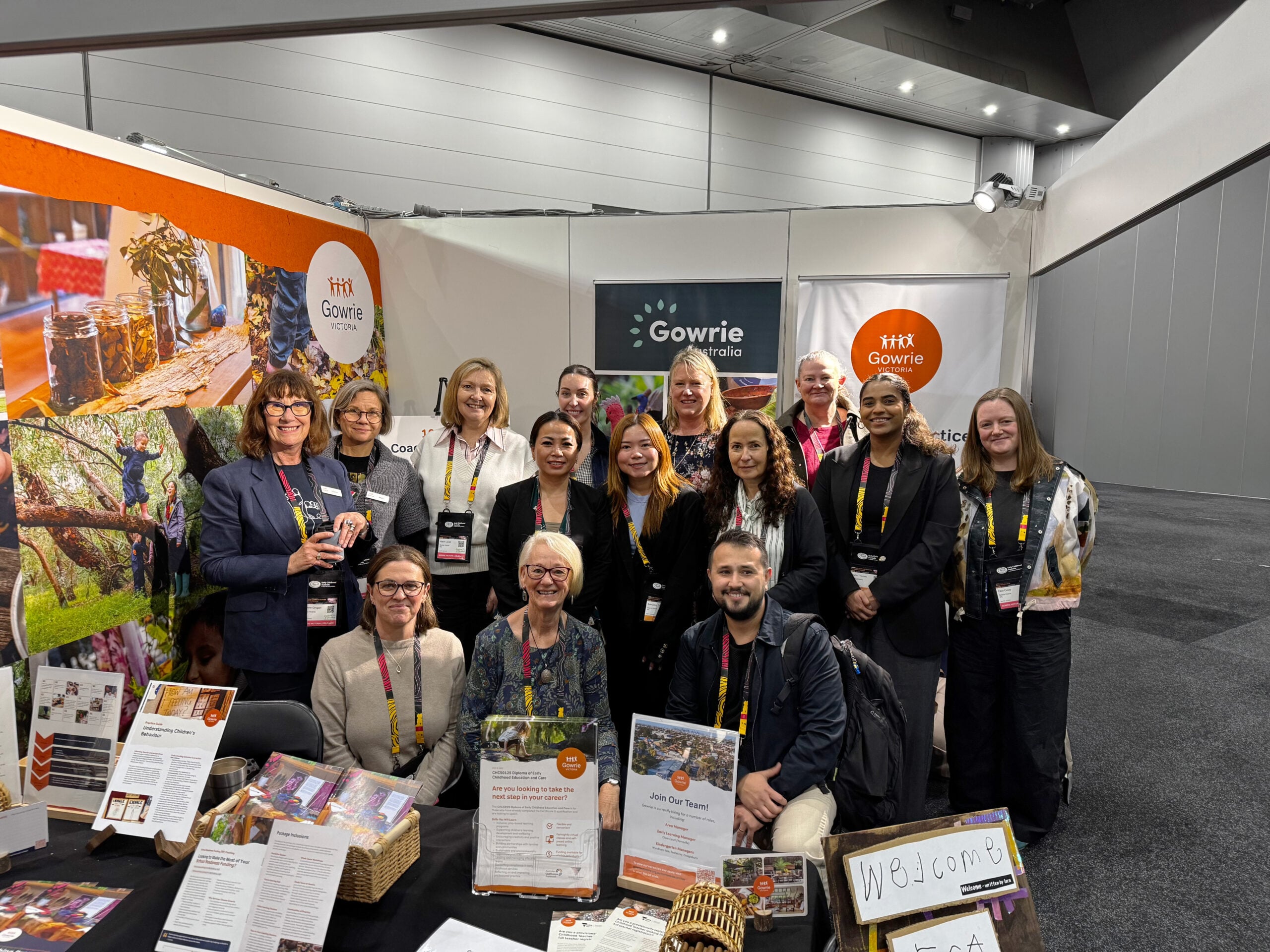
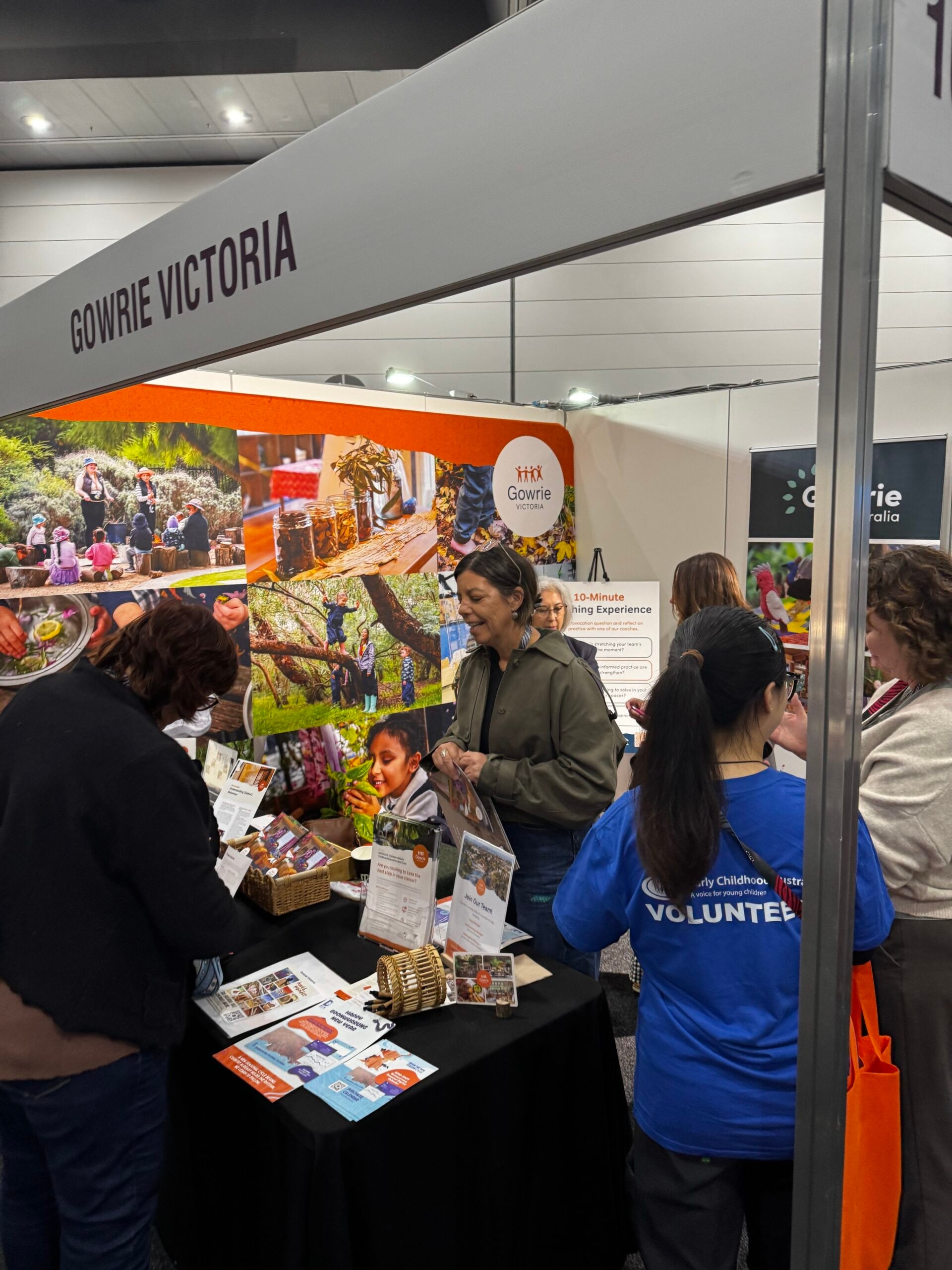
Gowrie Victoria educators and leaders attended the 2026 Early Childhood Australia conference in Melbourne, with several presenting and a number attending for the first time. CEO Karen Weston described it as the largest ECA conference to date with 2,300 people attending in person, and a further 400 online. Karen commented that “the record participation shows how important it is to come together as a profession and make some time for learning, reflection and sharing perspectives. It makes us stronger as a profession.”
We also enjoyed hosting our Gowrie colleagues from across Australia, meeting socially and sharing our experiences. Together we support 10,833 children and 8,862 families across 103 Gowrie Australia services.
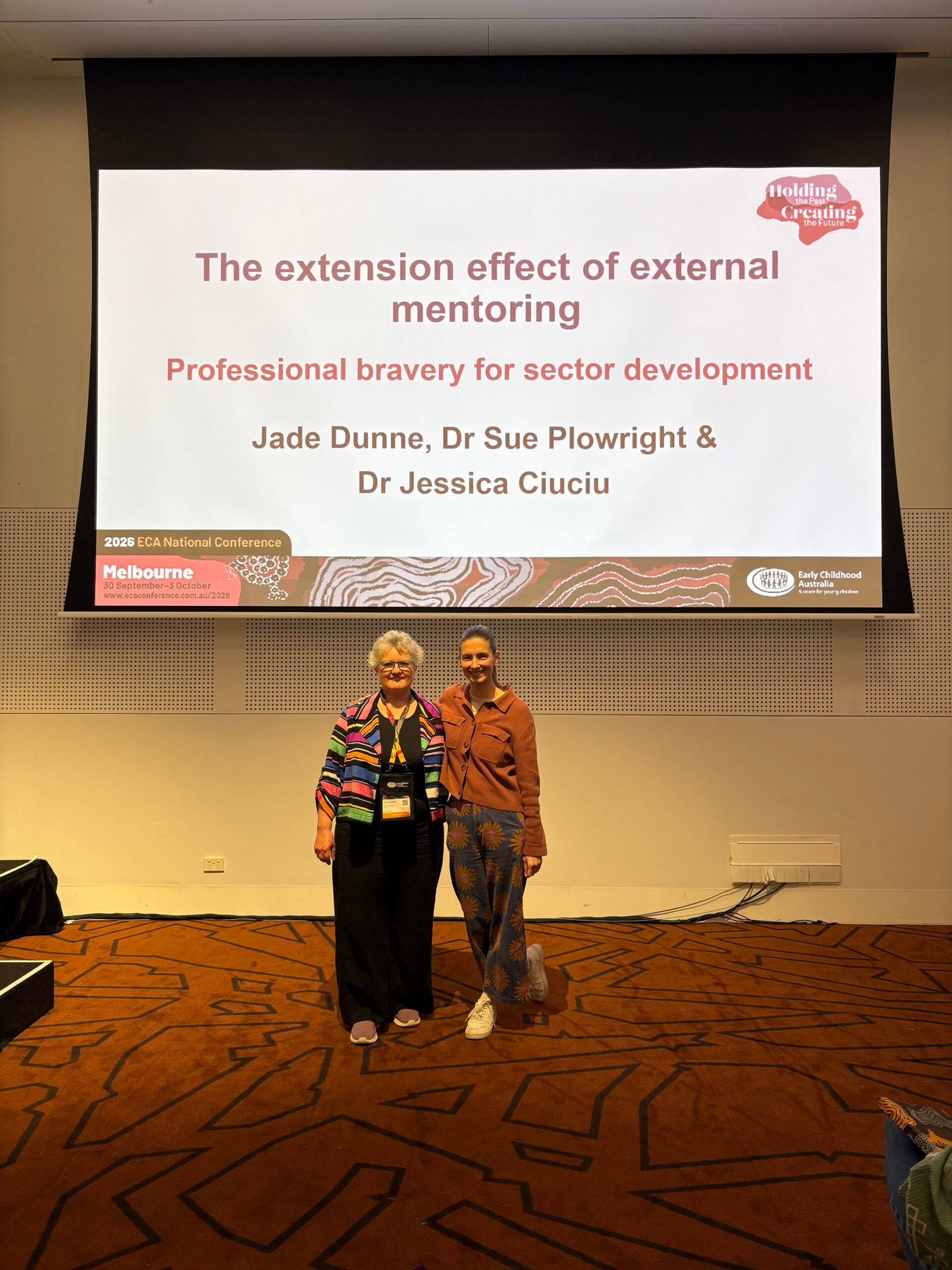
Gowrie presentations
For some Gowrie team members, including a number of our coaches, it was their first ECA conference.
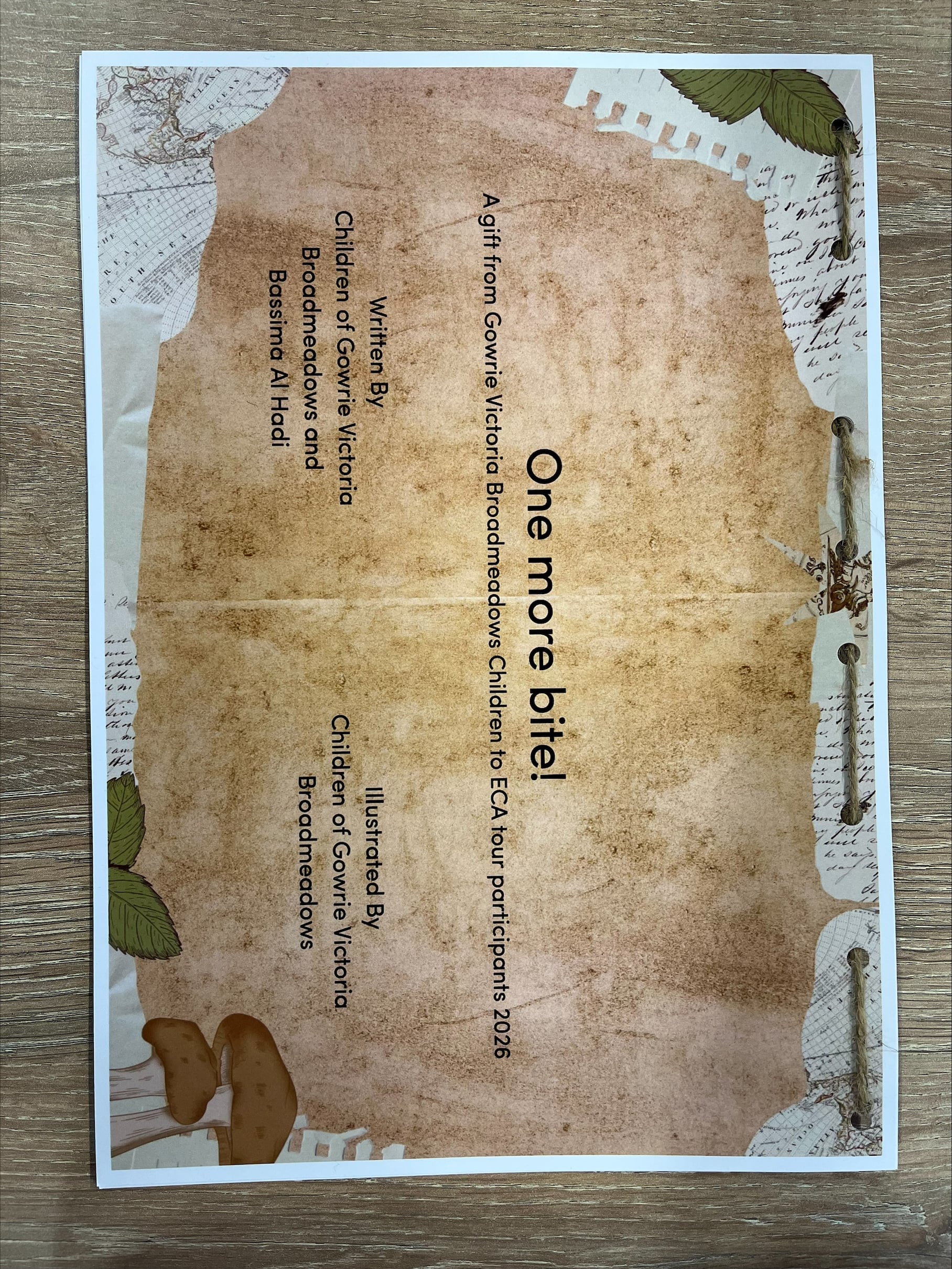
Educator Bassima from our Broadmeadows Valley service presented with Emma McGrath, Manager, Partnerships and Projects at fka Children’s Services, on supporting social cohesion through multilingual ecologies in early childhood settings. Bassima’s biggest takeaway was “the importance of inclusive and integrated practice, creating environments where every child, family, culture, and language is valued and has a place.”
ECT Rebecca from The Harbour and Philippa from our Adult Learning team presented, sharing the story of Lightscape Explorers. This interactive discovery lab was hosted by Gowrie at The Harbour with Global Play Lab as part of Museum Victoria’s Playbound Festival. Children of different ages and abilities revisited materials, explored light, shadow and transparency, and contributed ideas to an experience that was then shared with the wider community. Rebecca says meaningful participation “goes beyond simply listening to children.”
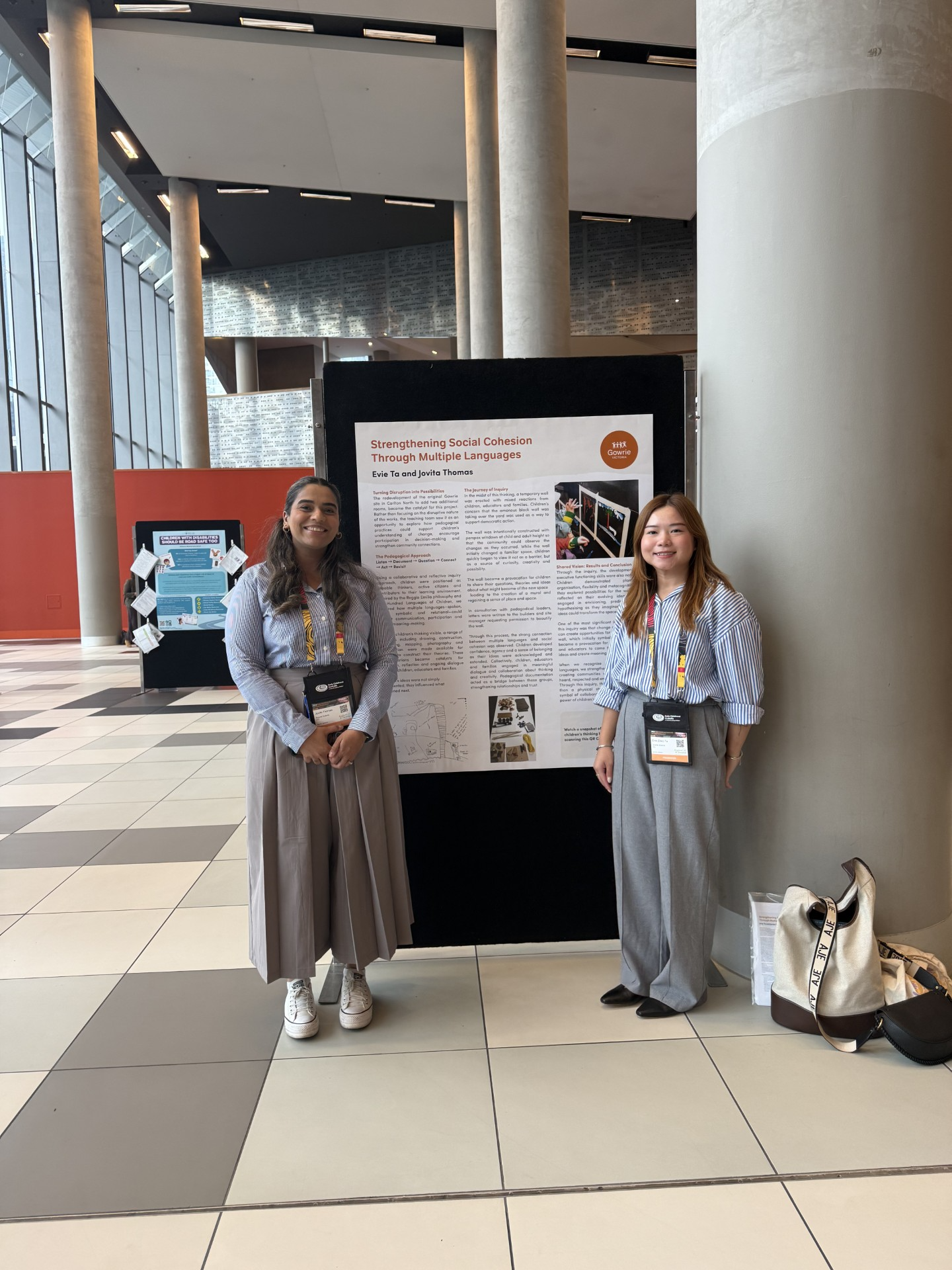
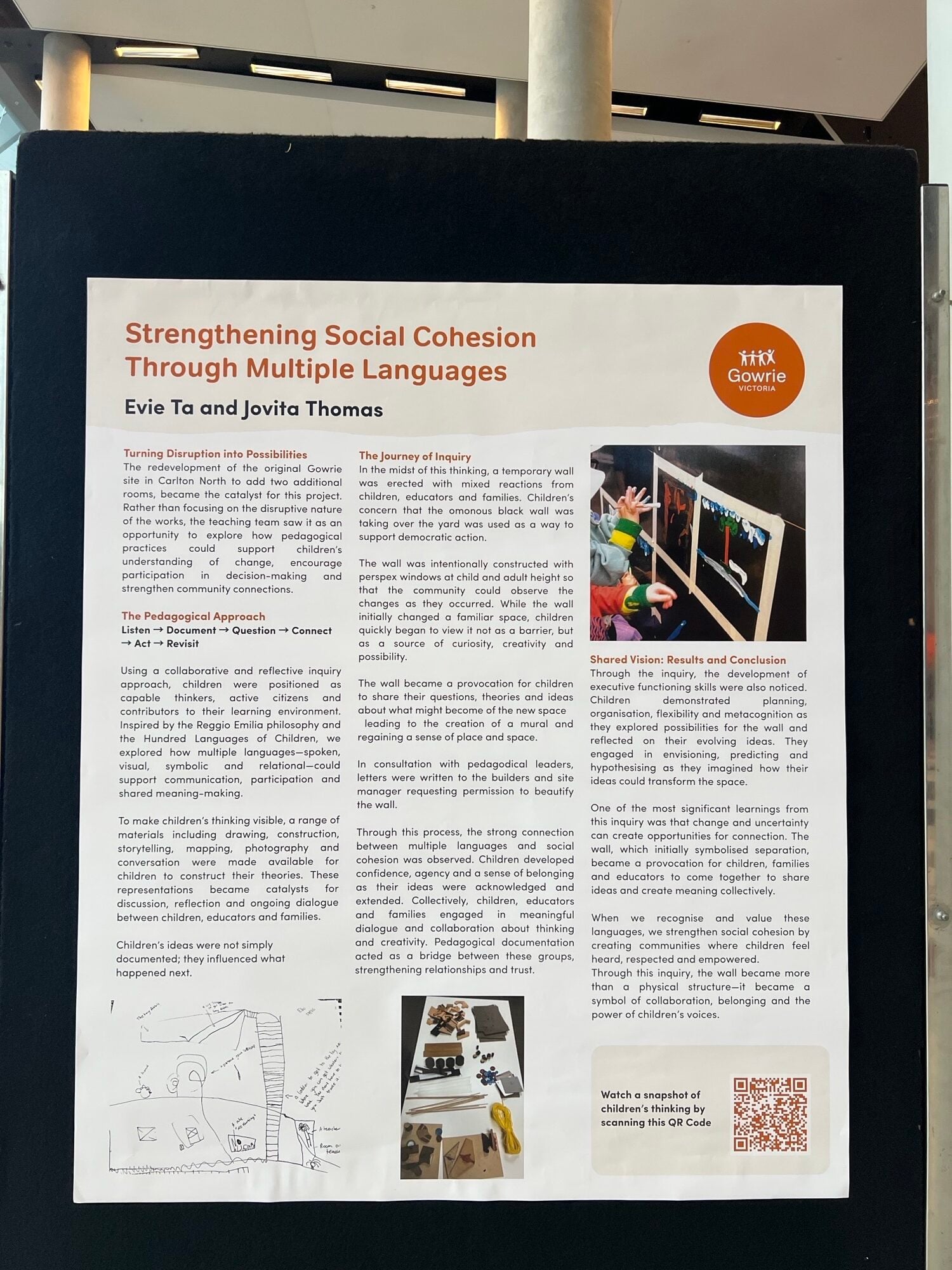
ECTs Evie and Jovita from Carlton North presented their work on an inquiry project into strengthening social cohesion through multiple languages, with Evie saying the conference validated her recent work and gave her new research to consider.
On display on the second floor of the venue were some posters about the history of Gowrie and showcasing how we stand on the shoulders of many and acknowledging some of the leaders who came before us.
Our team members found the conference insightful and learnt a lot
- Bassima pointed to sessions that treat children as active contributors to a sustainable future and said they prompted her to think about how everyday practice can help children care for nature and make responsible choices.
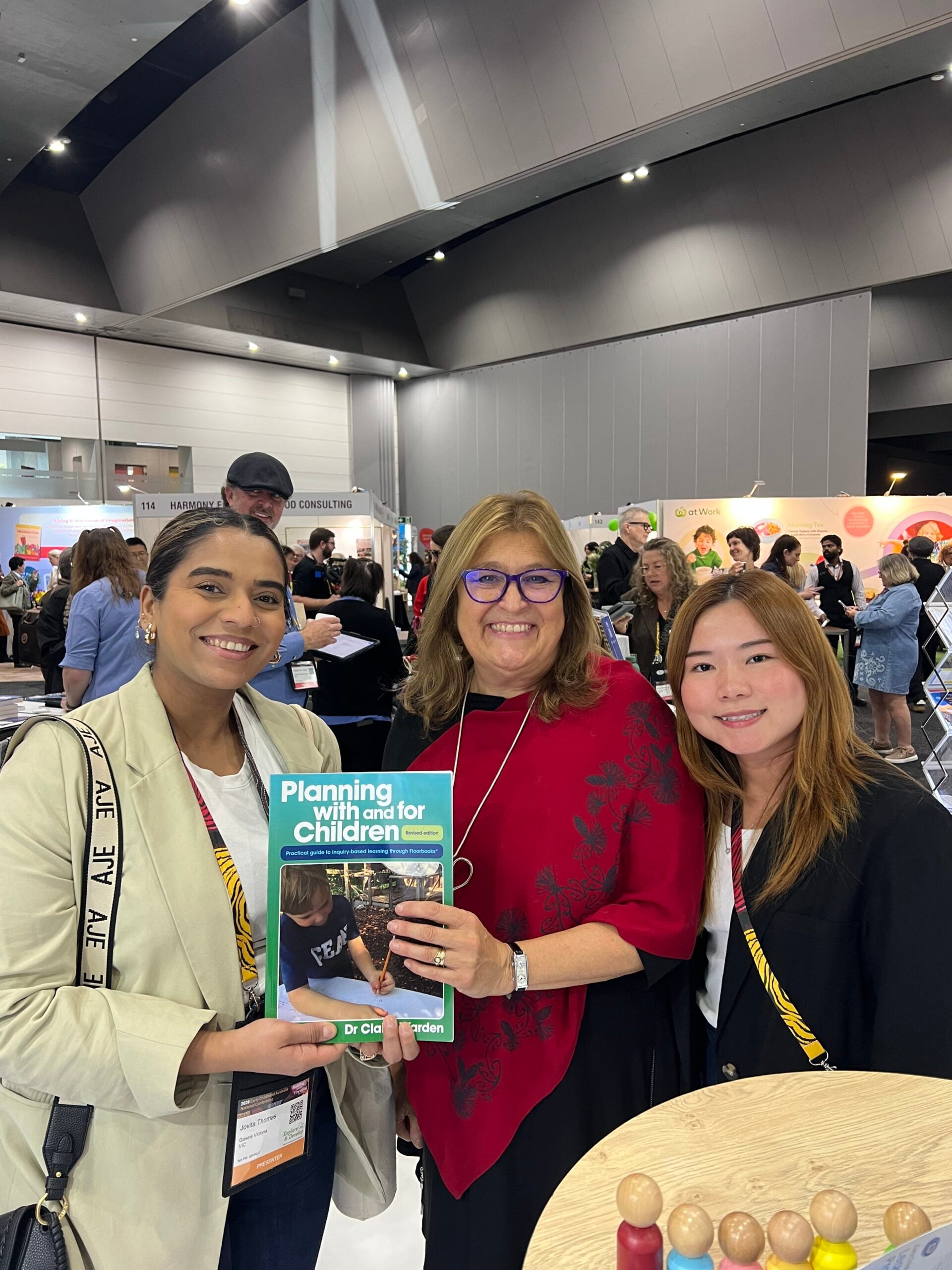
- Early Learning Manager Emily from Carlton North was struck by Claire Warden’s session on slow pedagogy and by learning about Dadirri, an Aboriginal practice of quiet stillness, deep listening and connection to Country. She says it reminds educators to step back and allow children uninterrupted moments of discovery. She also noted that children thrive when the adults around them are well and grounded.
- Early Years Leader Cerri from The Harbour said a session on AI use stayed with her. She described examples where AI feedback on children’s work differed by gender, with girls receiving more passive feedback and boys more detailed feedback. She also described an example where a First Nations educator asked AI to generate an image of a First Nations teacher and received a racist stereotype. Cerri says educators need to be aware of these biases, and that users should declare when they use AI.
- Early Learning Manager Michelle from Broadmeadows Valley said the conference showed the organisation’s investment in its leaders. She has one key phrase that has stayed with her after the conference, and that is agency is not something we can offer children if it is denied of educators.
Children’s Week 2026
This year’s Children’s Week (24 Oct – 1 Nov) theme was Children have the right to use their own language, celebrate their culture and practise their religion. It’s an important reminder to us that all children have the right for their voices to be heard and be respected. We have so many incredibly diverse families at Gowrie, and there’s a lot we can learn from one another by sharing in our cultural similarities and differences.