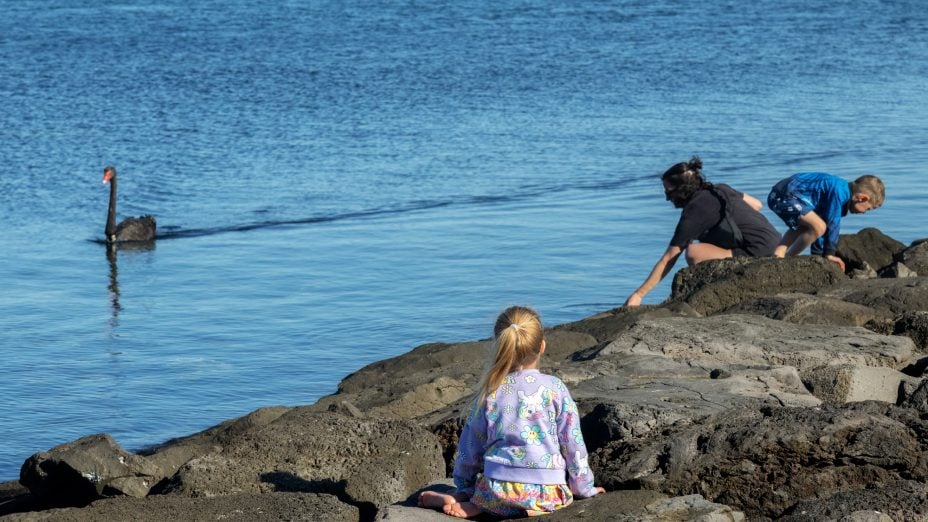
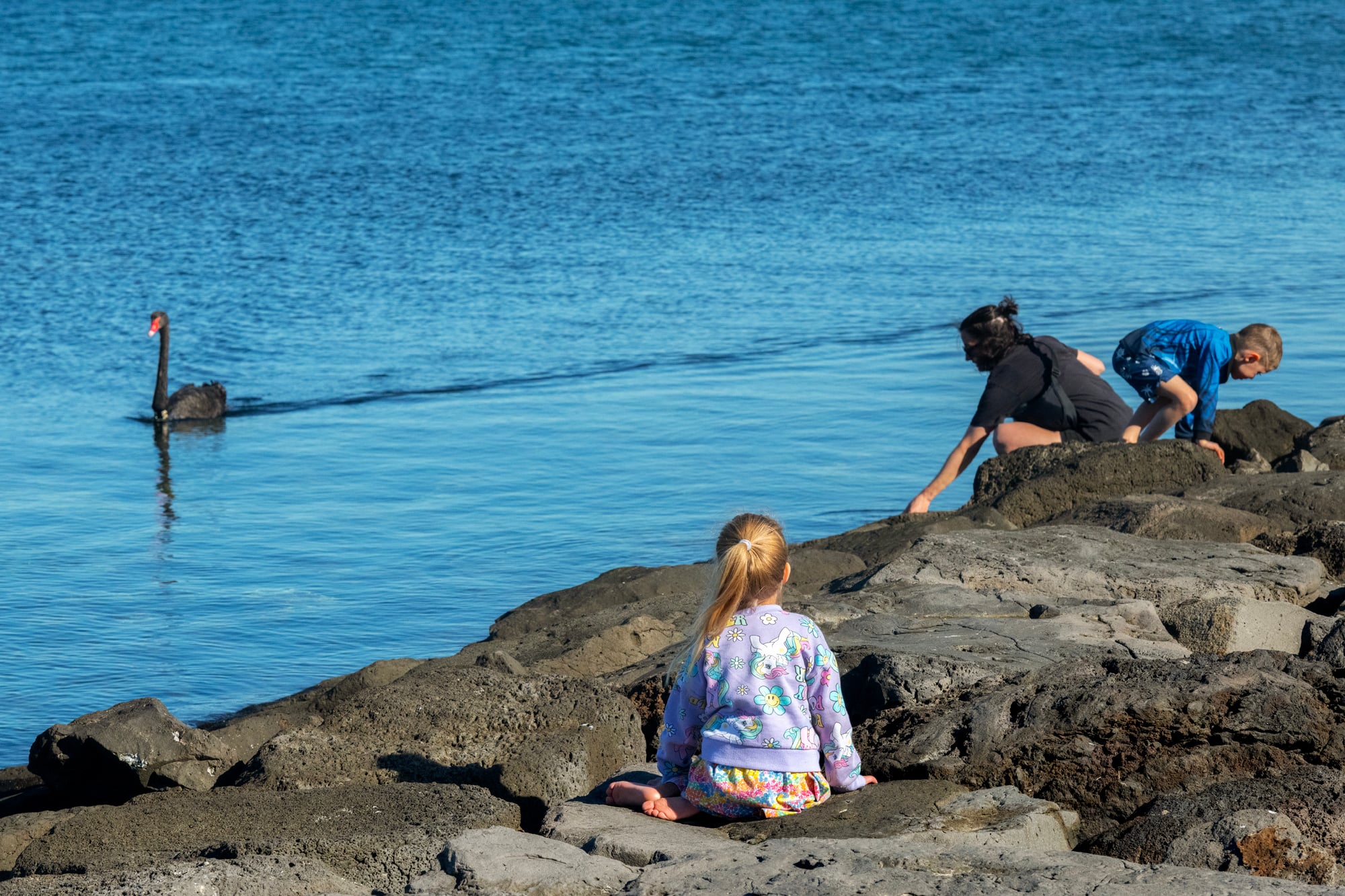
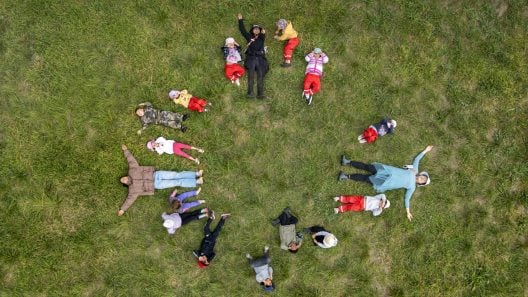
Gowrie Clare Court’s Out and About program began over a decade ago, and from there, the service has cultivated a strong culture of openness to risky play, authentic presence within the local community, and connectedness to the natural world. The program invites each group to head out every day to the neighbouring Cruickshank Park, where they explore, play in the water, and notice the birds in their habitat.
Beach Kinder formally commenced in 2019 and is now a key part of the sessional kindergarten programs. Educator Jess says that Beach Kinder was a natural extension of Out and About as they were already used to going out on Country and learning through the environment. “Once we started coming, it easily fell into place as a rich program based on learning through the land.”
Exploring risk and responsibility through nature-based learning
Te Rira explains that they engage in shared decision-making with the children about where they’re going each time within their designated stretch of the beach. “For example, if it’s supposed to be rainy, we’ll talk to the children about the weather. We’ll talk about what clothing would be appropriate to wear, and which destination would be best suited for the weather. We involve children in every step along the way to build a sense of agency and responsibility.” They even bring a small tent with them so that there is a private space if children need to change out of wet clothing.
Te Rira highlights the importance of making sure that all educators feel comfortable attending Beach Kinder. “We talk about being responsive for children and their families” Te Rira says, “but we also need to be responsive to our team here.” Educators have discussions around what risk at beach kinder could look like, what boundaries to put into place, and so on. “We need our team to have confidence when they’re there. If they’re not feeling confident, that’s going to impact on the positive outcomes which emerge from Beach Kinder.”
How Beach Kinder builds enquiry and connection to Country
Te Rira is passionate around the unique learning opportunities which Beach Kinder provides. “It instils in the children such a strong connection to Country,” she says, “they are so excited to learn about different sea birds, the changing of the seasons, and how everything is interconnected.” At the mention of sea birds, a large flock of cormorants take flight, flying directly over the Beach Kinder site. “Dingos!” She calls, “look up! There are so many cormorants coming towards us!”
Building on the example of the cormorants, Te Rira shares that even in a moment like this, instead of simply asking, ‘Why did the birds fly over us?’ and settling on a quick answer, they’d turn it into an enquiry. “We might wonder together, ‘what drew the birds to fly over us just then?’ This question opens up space to explore all the possibilities, and truly hypothesise the ‘why’, rather than just delivering an answer,” she explains. This approach is backed by a small notepad hanging from Te Rira’s lanyard, which is used to document the children’s ideas and questions.