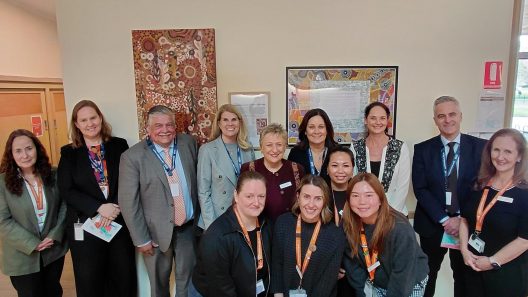
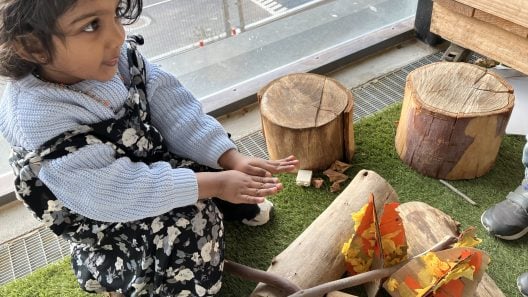
At our 2026 staff conference, Trainer and Assessor Dr. Sayuri Amemiya presented her research on children’s relationship with food in a session titled Mapping the Contact Zones of Children Becoming Eaters. Her work invites educators to look beyond food as a substance only for eating. When children touch food, they connect with the people, places, living things and experiences involved in bringing that food to them.
Food is more than what’s on the plate
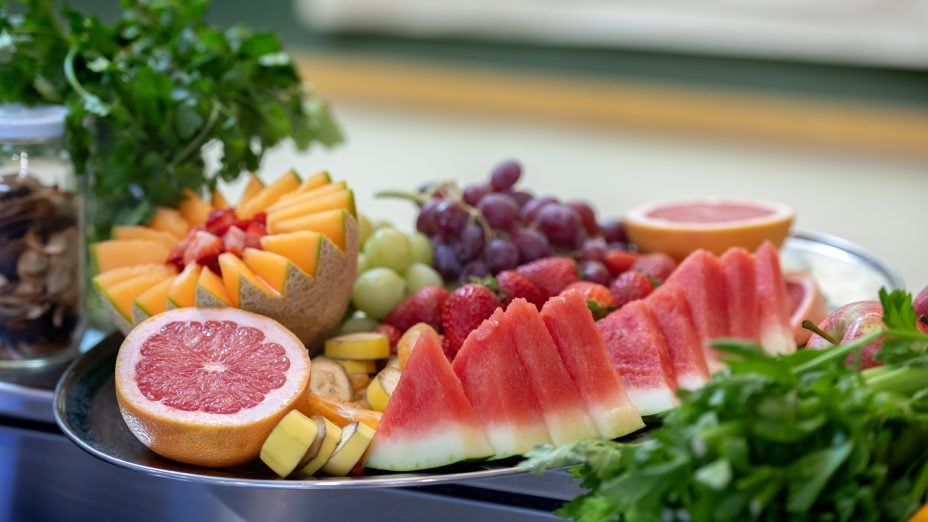
Food doesn’t just appear on a child’s plate or in their lunchbox. Before a child eats spaghetti bolognese, farmers, animals, transport, cooks, ingredients and kitchen routines have all played a part in bringing that meal together. With each of these steps, food changes.
For children, even once they begin eating the food, their relationship with it may change. A bowl of pasta might be “yummy” one moment, but the instant it hits the floor, it becomes “yucky”. The food hasn’t changed, but the relationships and practices surrounding it have. These changes influence how children experience and connect with food. Paying attention to these shifts helps educators notice how children build their understanding of food through lived experience, not just instruction.
Learning happens through contact
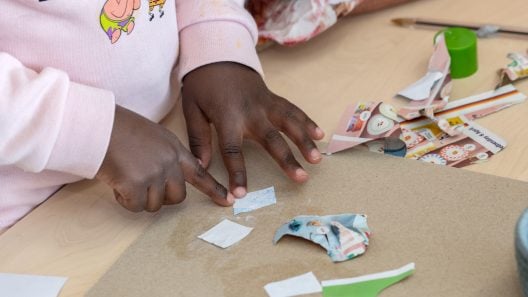
Young children learn with their whole bodies. If you give a toddler a mandarin, they’re unlikely to simply put it into their mouth. More often, they’ll squeeze it, watch the juice run through their fingers, smell the citrus, feel the sticky texture and pull it apart piece by piece.
In these moments, learning isn’t about naming a fruit or identifying its colour. Children are experiencing texture, force, cause and effect, language and sensory experiences all at once. The learning here is coming from how the child interacts with the fruit, not from what we tell them about it.
For most educators, food experiences are shaped by routines, policies and practical demands—we often have meals to serve, allergies to manage and tables to clean. These responsibilities matter, but providing time to reflect on children’s relationships with food alongside them opens up new possibilities. What happens when we become curious about how children encounter food, rather than simply whether they eat it? What learning might we notice if we paid closer attention to the sensory, embodied and relational experiences around meals? And how do children’s conversations, gestures, expressions and discoveries reveal learning that reaches well beyond nutrition?
In reality, some of the richest learning happens during the most ordinary routines. Children notice the sound of crunchy vegetables, the smell of freshly baked bread, the warmth of soup, the colour of fruit and the way food changes when it’s mixed, squeezed or shared. They learn through relationships with educators and peers, but also through their encounters with food, plants, animals, utensils, soil and the places where food is grown, prepared and shared. These interactions help children build relationships with food itself, but also with people, cultures and the wider world around them.
An invitation to reflect
Sayuri’s doesn’t centre around changing every mealtime routine. Instead, she invites us to become more curious about the routines we already have. When children touch food, who and what else do they touch? Borrowing from philosopher Donna Haraway, this question encourages us to think beyond the meal itself and consider how food connects children to people, places and the more-than-human world. “If we see children’s learning as happening in relation with food, rather than simply learning about food, how might our routines, documentation and planning change?”
Food is part of children’s daily lives, and every mealtime offers a chance to connect, explore, communicate and learn. By recognising these moments, educators can deepen children’s experiences in ways that support curiosity, relationships and a greater appreciation of the world around them. Seen this way, food becomes a relational and life-sustaining part of children’s lives, connecting them with people, places and the more-than-human world in meaningful ways. In noticing this, we open up space to reflect on our own practice too.
For Sayuri, working as a trainer and assessor with students entering the early childhood sector for the first time is exciting. “I’m able to challenge their thinking and support them to experience the joy of sharing curiosity with children,” she says. “When we pay close attention and stay open to different perspectives, our routines can become meaningful experiences for both educators and children.”
Reflective questions for educators
- What routines around food are so familiar to me that I no longer really see them?
- How does my documentation currently capture (or miss) learning that happens during eating?
- What is one everyday food moment I could look at differently this week?
- How can I encourage curiosity about food without focusing only on eating?
- How can I recognise the cultural and environmental stories behind the food we share?