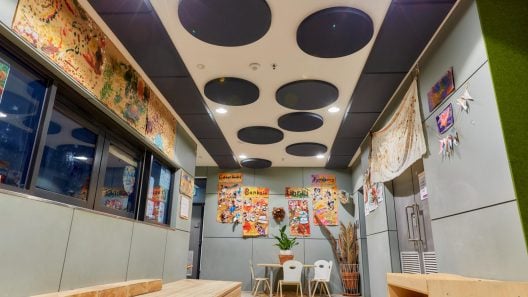
In June 2024, Gowrie Carlton North underwent a transformation, where it expanded from three to five children’s programs. The renovation also included an extra office, additional adult and community spaces, two new programs, as well as a refreshed outdoor area featuring a new veranda and garden space. But what made this transformation even more special was the involvement of the children throughout the process.
Observing the build in real time
From the outset, our operations team placed children’s interests at the centre of decisions. Demolition of the old building sparked great curiosity among children and families during drop-off and pick-up. Although the construction site was hidden from the garden by a tall black fence, plans were already in place to install perspex viewing panels. Once demolition began, the team brought this idea to life, placing windows at both child and adult height so everyone could safely observe the diggers, cranes, and building process.
This close-up view, as an extension of their usual learning environment, sparked deep curiosity from the children. Educators noticed the children engaging in collaborative discussions around their observations, eventually asking educators questions about construction materials and methods. “We began to see more and more children show a sustained interest in the construction” Evie says, “and from there, we expanded their thinking with tools, provocations and language.”
Collaborative learning and imaginative thinking
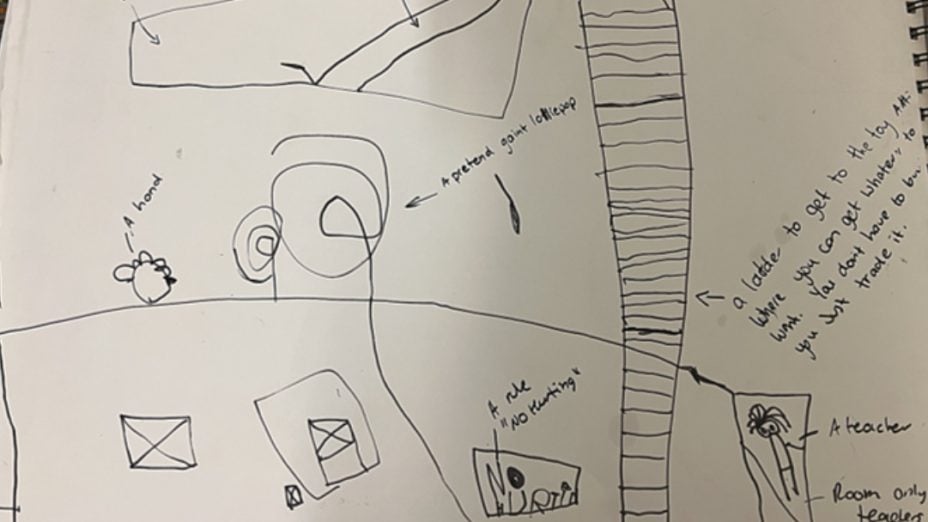
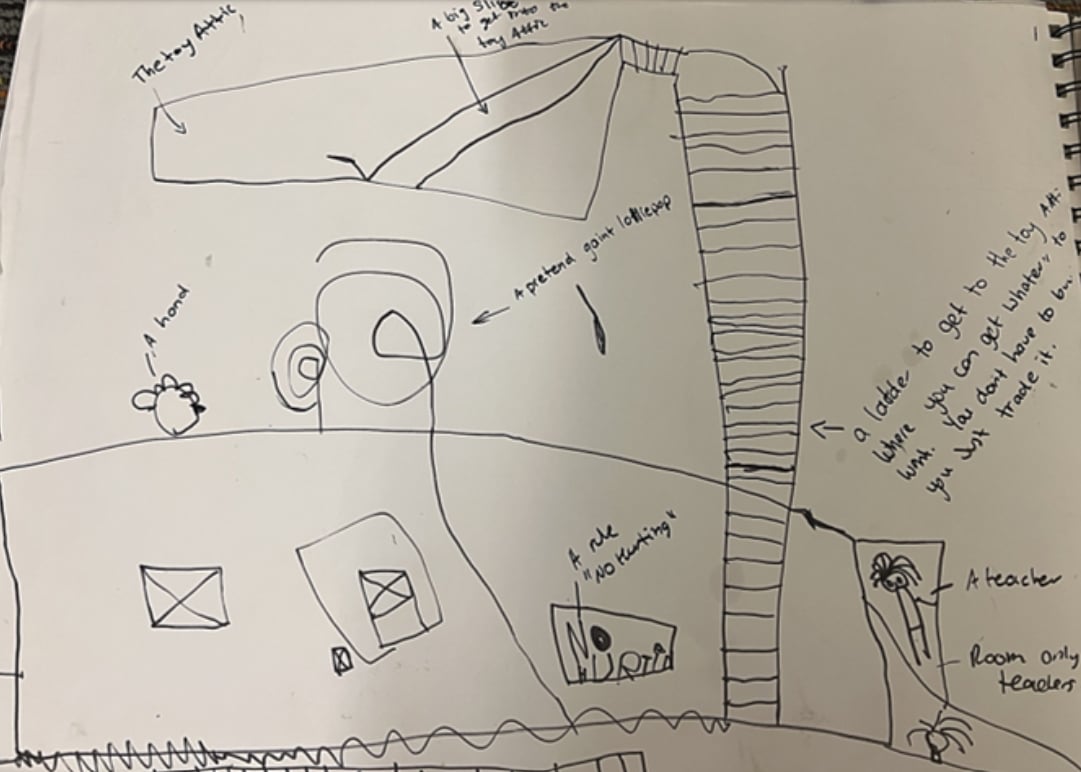
The team consulted the children on the purpose of the build. Together with their educators, the children created group drawings imagining what the new rooms might look like. “We want a big slide inside the new rooms!” one child said. Another shared, “We should build a bridge between all the rooms so we can cross over!” While not all ideas could be brought to life, these imaginative contributions highlighted children’s creativity and growing understanding of space and function.
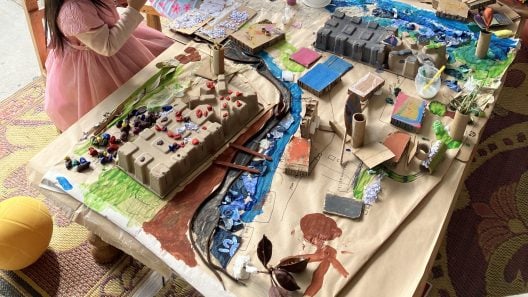
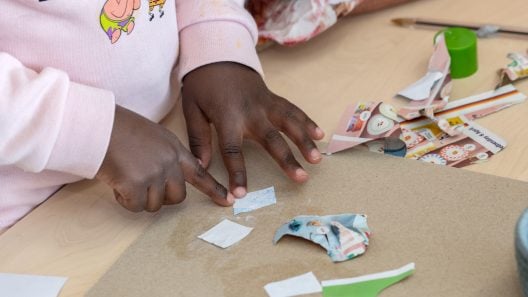
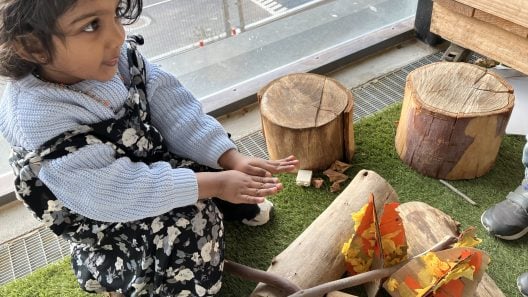
Educators used images of building plans and construction updates, to extend learning and keep the exploration active and engaging. A multi-modal approach was used to explore the children’s thinking with offerings of loose parts construction, drawing, storytelling, and plasticine as tools for expression.
Children as collaborators
Children were consistently consulted during the build phase; from discussing what would be needed during noisy periods, to having their input given to construction staff as a part of the induction process. Simon, Gowrie’s Property and Project Manager, recounts the children asking him to remind the workers to use respectful language and quieter voices; a request which he acted upon with enthusiasm. Children were keen to ensure that the workers respected their need for quiet at rest times, and reinforced these rules with confidence.
Learning was extended in multiple ways. The looming black wall was confronting for many of the children so the educators asked what could make it more inviting. The children decided it needed drawings and colour but ethical questions arose; can we draw on walls? Can we draw on something that doesn’t belong to us? The children sought permission by writing letters to Simon. Simon responded with approval but also challenged the children to think about how they would record their work as the wall was temporary leading to deeper discussions about time and how to remember something once it’s gone.
Simon saw this project as a genuine display of Gowrie values. “Children weren’t passive observers; their feedback shaped how builders worked, even influencing daily schedules and behaviours”, he reflects.
Children continued shaping their learning environment right up to the finishing touches. They helped set up the new rooms, guided by their interests and emergent learning. A service-wide vote took place for the naming of the new rooms, involving children, families and educators.
Reflecting on the journey
When asked what stood out most in the process, educators shared how inspiring it was to witness children’s wonder, imagination and strong sense of agency. Their ideas, even the more imaginative ones, offered insights into their thinking and provided opportunities for rich dialogue and learning.
Simon is proud of the project. As he reflects, “The entire project was built on mutual respect, open communication, and genuine child agency. Rather than disrupting the kindergarten experience, the project became a shared journey, one where children were not only informed, but meaningfully included.”
This project reminds us that children are not passive participants in their environments; they are active contributors, capable of shaping the world around them when we are responsive, respectful and truly collaborate.
Read more: Gowrie opens new rooms across two services