As parents and educators, we want our children to be independent, organised, and able to manage their emotions. We want them to think through problems, bounce back against challenges, and succeed at life. At Gowrie at The Harbour, we’re intentionally supporting children to build these skills every single day.
Throughout our day, we are supporting children with their executive function skills—organisation, working memory, attention, thinking flexibly, thinking about thinking, and self-regulation. As Early Years Leader Cerri explains: “This can be achieved in different ways through the different age groups.” But what does that actually look like? Here’s how we’re building these critical skills.
Name labels and organisation
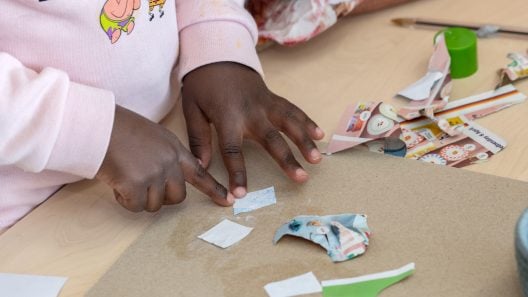
As some of the children are making art that they would like to bring home, we’ve introduced a name label area in the room. The children have cut up their own name labels and put them in a box with their photo. When they’ve finished their work, they can get a name label to stick on it. This supports their organisation and planning skills and name and letter recognition.
Board games and self-regulation
We’ve been exploring lots of different board games, all of which support turn-taking. This supports the children in their executive function skills of self-regulation—having to wait your turn and thinking about thinking. Matching games have been very popular, so we are now branching out to different memory games, working on children’s executive function skills of working memory and attention, focusing on a task.
Calm sequences for managing big feelings
As part of supporting children’s self-regulation skills, we have been working on a calm sequence. This sequence is something we use regularly when children are already calm so that when they feel dysregulated, they have a strategy in their “toolbox” that they can call upon. The visuals are a quick visual guide for the children to see to remind them what they need to do.
Independence and self-help skills
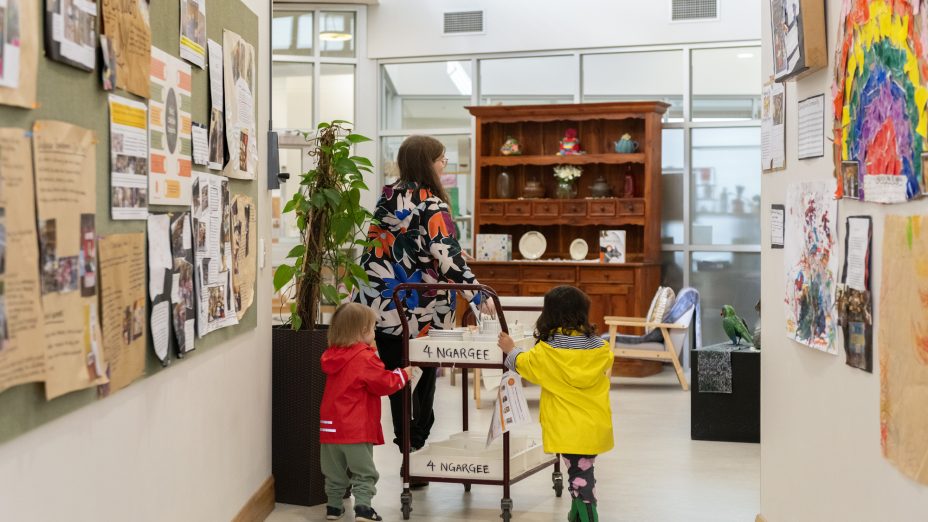
We continue to support the children in their independence skills and self-help skills, putting on their own socks and shoes. We encourage children to put their own bags and water bottles away. This supports them to respect and look after their own belongings and start their day with a plan of things they need to do to be organised for their day. As this becomes second nature and automatic to children, it’s one less thing they must think about.
We’re also working on functional life tasks, including getting things from their own bags, opening their water bottles, pulling up and down pants, and putting on sunscreen. During our meals, children pour their own drinks, taking off milk lids, pouring, and then putting the lids back on, ready for their friends to serve their own meals and rinse their dishes.
Learning about waste and our environment
We have also been saving our fruit scraps and the children have been cutting them up with children’s knives and putting them in the compost bin. “This is supporting the children to think about waste and how it can be reused to support our garden and plants,” explains Cerri.
Learning to plan and make decisions
On excursions, the children learn to plan, supporting their executive function skills of organisation: What do we need? Our hats. We need to go to the toilet before we leave. We need to put on our orange wristbands with The Harbour’s number on it. We need to do a roll call before we leave, while there, and when we get back.
We look after each other by holding friends’ and educators’ hands on the way. We learn road safety. The children look left and right, and left again, and tell us when it is safe to cross. This encourages the children to think about when they’re crossing safely and take part in decision making and not just following others.
At the park, they must wait while an educator does a safety check, supporting children in delayed gratification and self-regulation skills, adapting to new situations and impulse control. At these excursions, the children work together, pushing the water fountain, working the digger, which was sometimes a four-friend job! This required collaboration, turn-taking, and persistence. They practised their climbing skills on the climbing wall and frame.
Why this matters
Every task, every game, every excursion is an opportunity for your child to develop the skills they’ll need to succeed at school and in life. When children can organise themselves, manage their emotions, think flexibly, and work with others, they’re building confidence and capability that will support them for years to come.
We’re proud of the intentional way we support your child’s development at The Harbour. If you’d like to learn more about how we’re nurturing these skills in action, please contact us to arrange a tour of our service 1300 446 974.