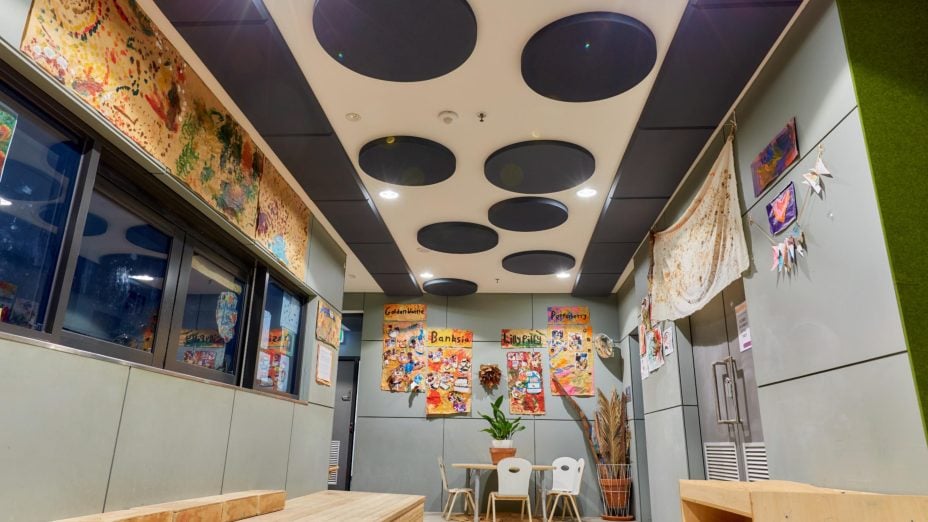
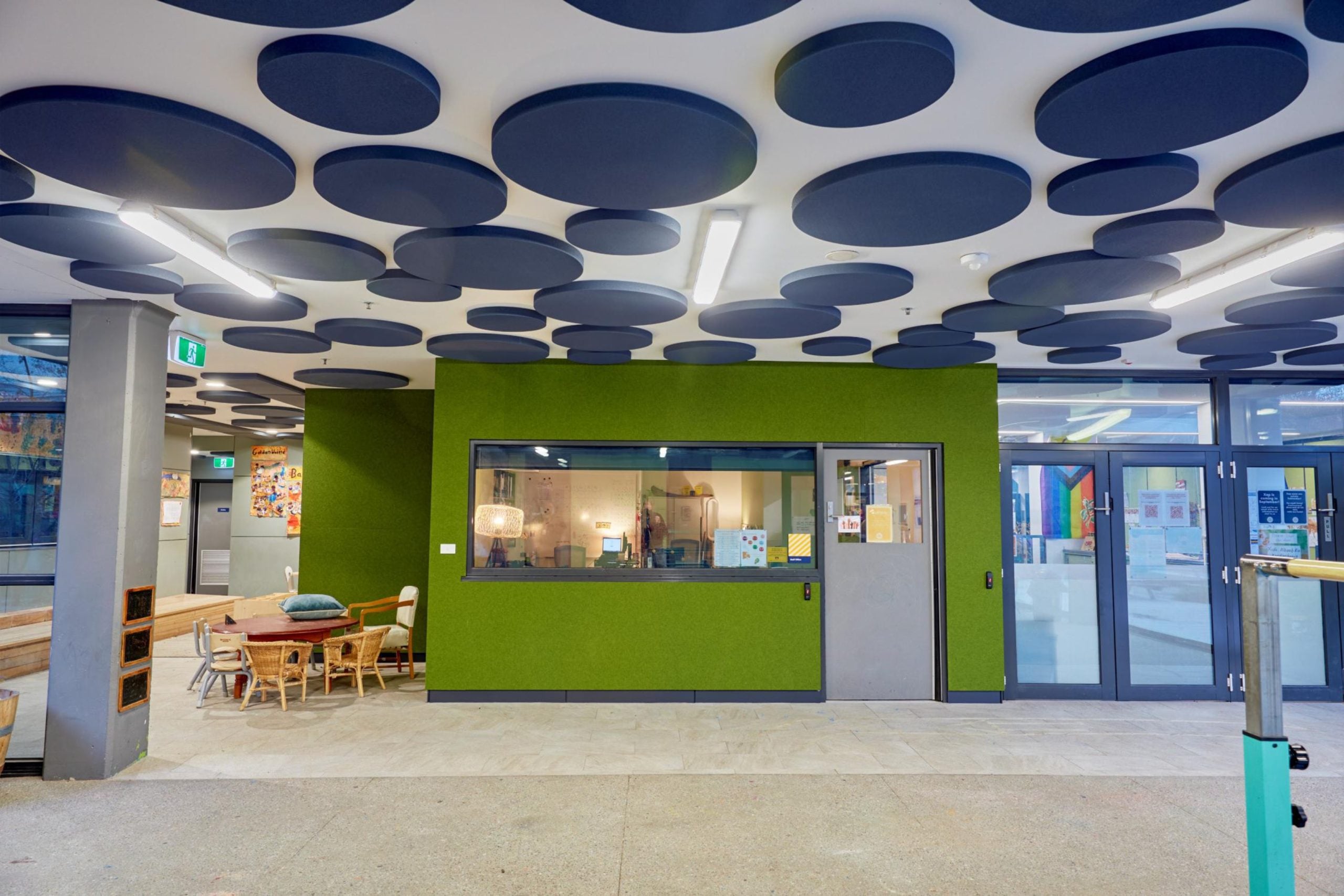
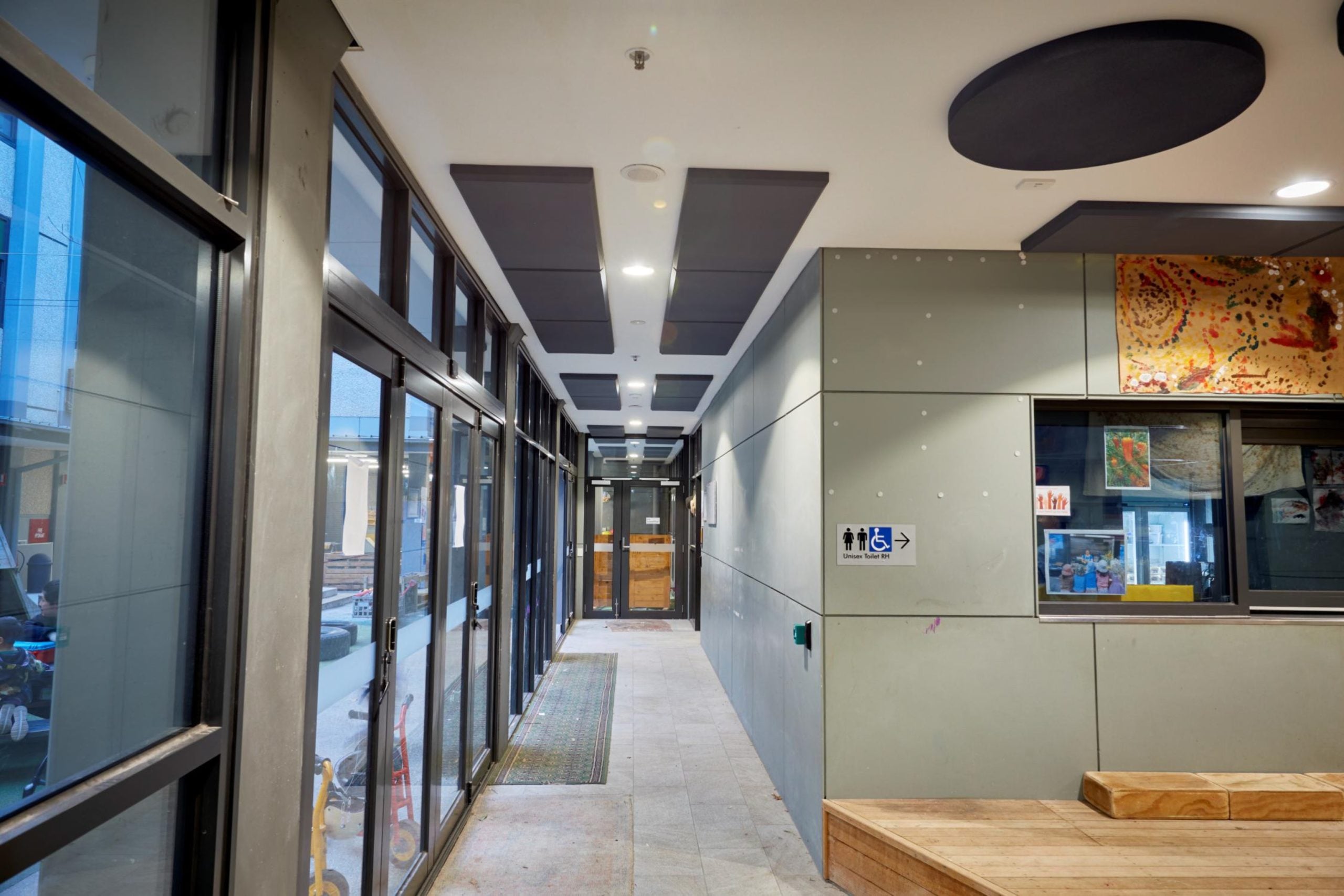
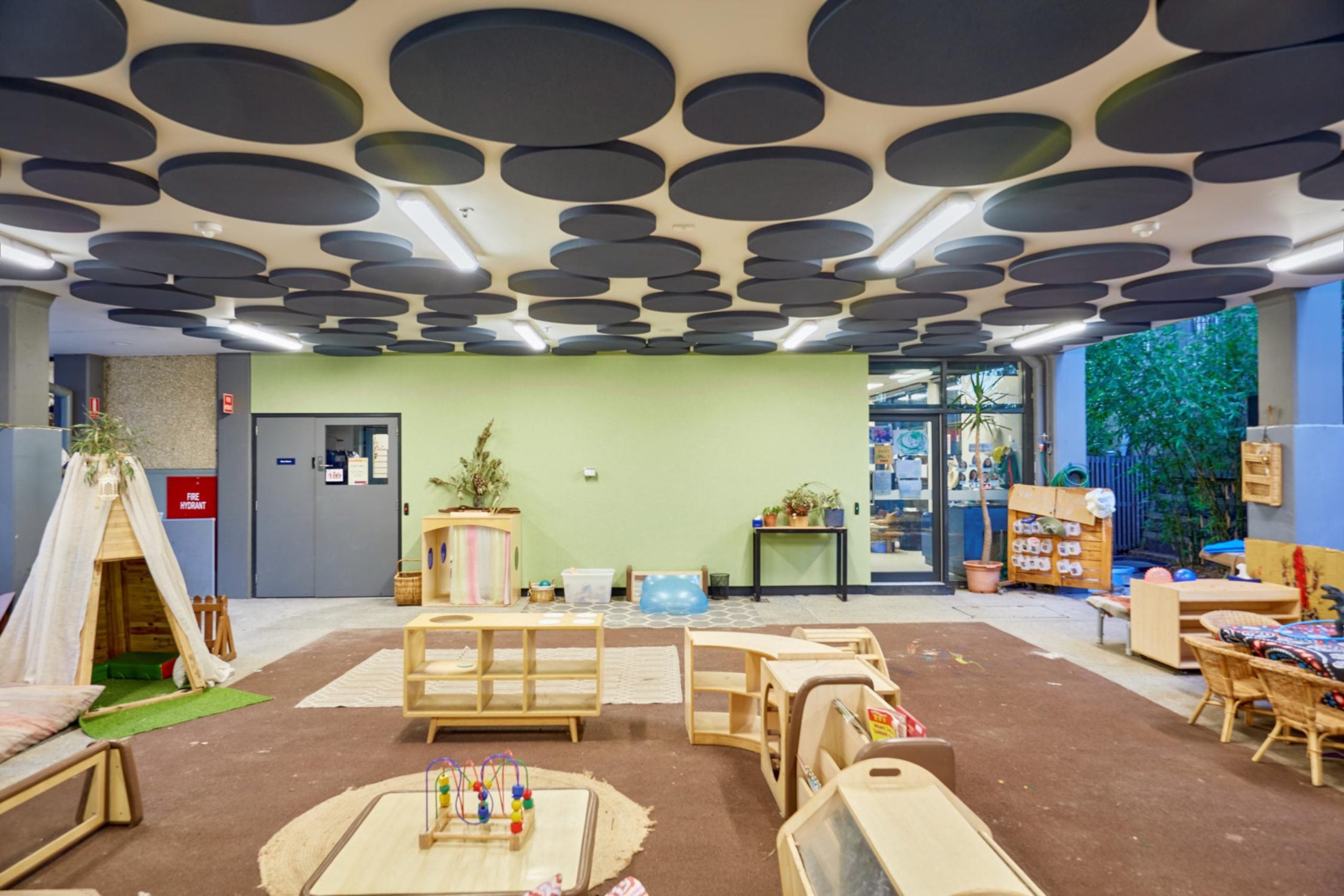
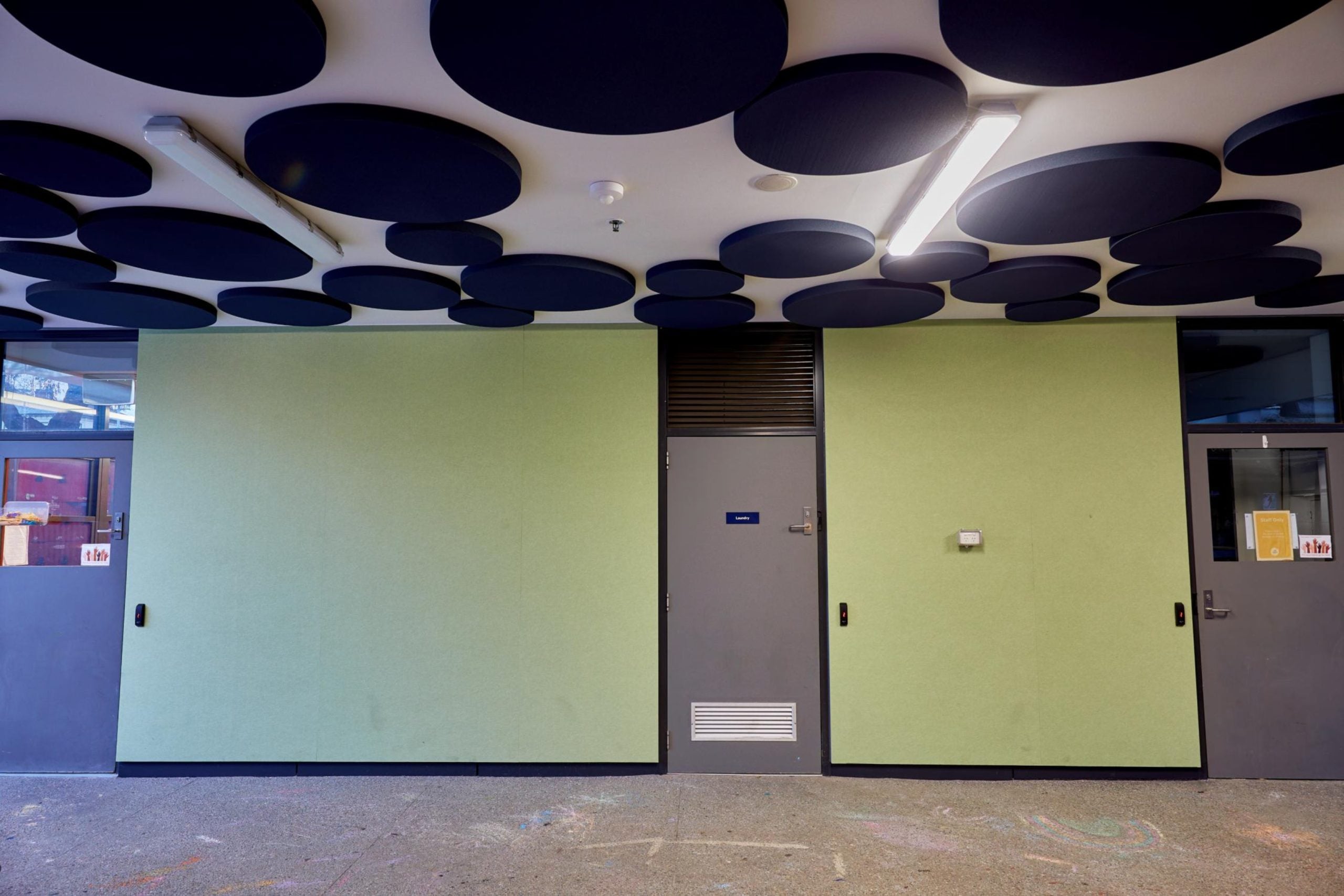
Earlier this year our Carlton Learning Precinct (CLP) service received a Victorian School Building Authority grant to address acoustic issues in the outdoor areas and the kitchen corridor, where excessive noise had made it challenging for our children and educators to communicate.
The noise would often cause the most disruption during some of the busiest parts of the day, including morning drop-off and again in the evening after lunch and rest. As a result, both our children and educators experienced sensory overload during these times.
The installation is finished now, and the difference has had a positive effect on how our team use these spaces, with a reduction in noise reverberation creating calmer, more comfortable environments for children, educators and families.
Early Learning Manager, Hayley, shares the experience of one particular child with complex support needs who used to spend long periods outdoors but would become distressed whenever another child cried nearby, as the sound carried and amplified through the space. Since the upgrade, that same child spends much more time outside, engaged in big body movement play and watching other children rather than reacting to them. Hayley puts it down to how differently sound behaves in the space now.
“Communication is easier across the space,” she says.
The corridor outside the kitchen also previously reverberated a lot of noise. Before the treatments, a ball bouncing off the wall would send sound ricocheting down the hallway. That echo is largely gone now, and children have started gravitating toward the back of the service, an area with enough sound dampening that the team have started describing it as having a studio feel.
Drop-off and the post-lunch period, the two times Hayley flagged as most overwhelming before the works, are also easier. She’s hearing less from the team about those windows feeling like too much.
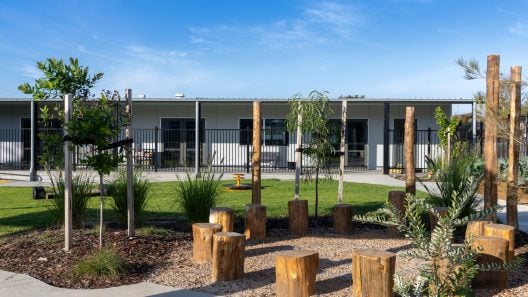
The change has shifted how our team plans the outdoor space, too. With sound no longer bouncing around unpredictably, educators have started zoning the area, one section for big body movement and louder play, another for quieter, more settled activities.
“We’ve been reflecting on how we can take advantage of the noise dampening by creating zones in the outdoor space, for big body movement play and for relaxation and quieter activities,” Hayley says. “This has had a positive effect on the flow and setting up of the outdoor space that supports children’s needs.”
Zoning wasn’t something our team could rely on before the upgrade, since sound would carry across the whole area regardless of how it was set up.
Independent testing backs up what our team is noticing day to day, with reverberation down 57% in the kitchen corridor and between 37% and 41% across the two outdoor areas. Simon Daniel, Property, Assets and Systems Manager at Gowrie, is delighted with the outcomes achieved through the acoustic improvements. “These outcomes align with Gowrie Victoria’s ongoing commitment to providing high-quality learning environments that support inclusion, wellbeing and positive educational experiences,” Simon says.
Read more about how the acoustic upgrade came about in our earlier piece on the CLP grant.